A3 DTF Printers for Startups, Clothing Brands & Small Businesses

Professional Apparel Printing Made Simple

Whether you’re launching your own clothing brand, opening a custom apparel store, or adding personalised garments to your existing business, an A3 DTF printer provides an affordable and professional way to produce vibrant, full-colour transfers on demand.

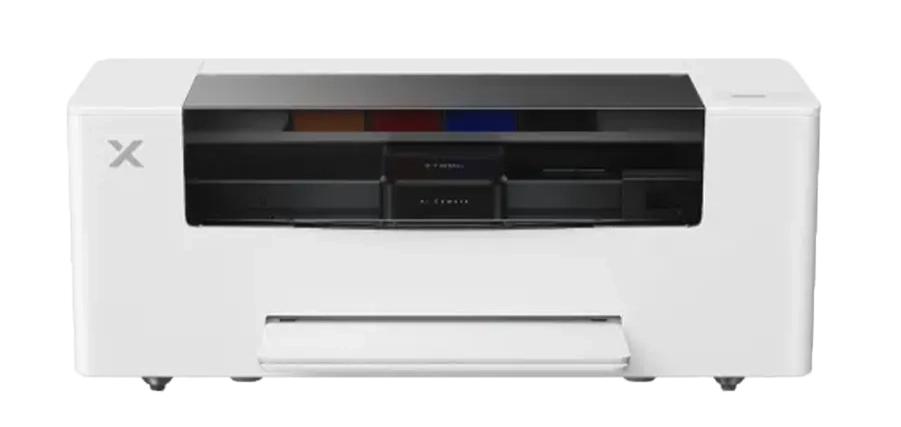
At MaxLaser, we’ve spent time testing the xTool Apparel Printer in our own workshop. Rather than simply listing specifications, we’ve evaluated what it’s actually like to set up, operate and maintain. Our experience showed that this printer combines excellent print quality, straightforward operation and automatic maintenance into a compact system that’s ideal for first-time DTF users.

If your goal is to produce finished garments instead of high-volume transfer rolls, an A3 DTF printer could be the perfect place to start.
Book a Live Demonstration Compare DTF Printers

Watch Our Honest xTool Apparel Printer Review

Instead of simply reading manufacturer specifications, see the printer in action. In this hands-on review, we share our real-world experience with setup, print quality, maintenance, speed and who we believe this printer is best suited for.

What Is an A3 DTF Printer?

An A3 DTF printer (Direct-to-Film printer) is a compact digital printing system that allows you to print full-colour artwork onto a specialised PET film. After applying adhesive powder and curing the transfer, the design is heat pressed onto garments such as T-shirts, hoodies, caps, tote bags, denim, workwear and many other fabric products.

Unlike traditional screen printing, an A3 DTF printer doesn’t require screens, lengthy setup times or large production runs. Each design can be customised, making it ideal for personalised apparel, short production runs and on-demand printing.

The compact size also makes A3 DTF printers well suited to home businesses, retail stores and small workshops where space is limited but professional results are still essential.

Why Choose an A3 DTF Printer?

An A3 DTF printer offers the perfect balance between affordability, ease of use and professional output.

It’s an excellent choice if you’re looking to:

  • Launch your own clothing brand.
  • Start a side hustle printing custom apparel.
  • Add garment printing to an existing business.
  • Produce personalised gifts and promotional products.
  • Offer on-demand printing without carrying large inventories.
  • Create premium apparel from a compact workspace.

Why We Recommend the xTool Apparel Printer

After testing the printer ourselves, what impressed us most wasn’t just the print quality—it was how approachable the entire workflow was.

From opening the box to producing our first successful print took approximately one to one-and-a-half hours by simply following the guided setup process.

The software walks you through each stage, film loading is straightforward, alignment is handled automatically and the printer clearly communicates what needs to happen next. This significantly reduces the learning curve for first-time users.

The result is a printing system that removes much of the uncertainty often associated with entering the DTF market.

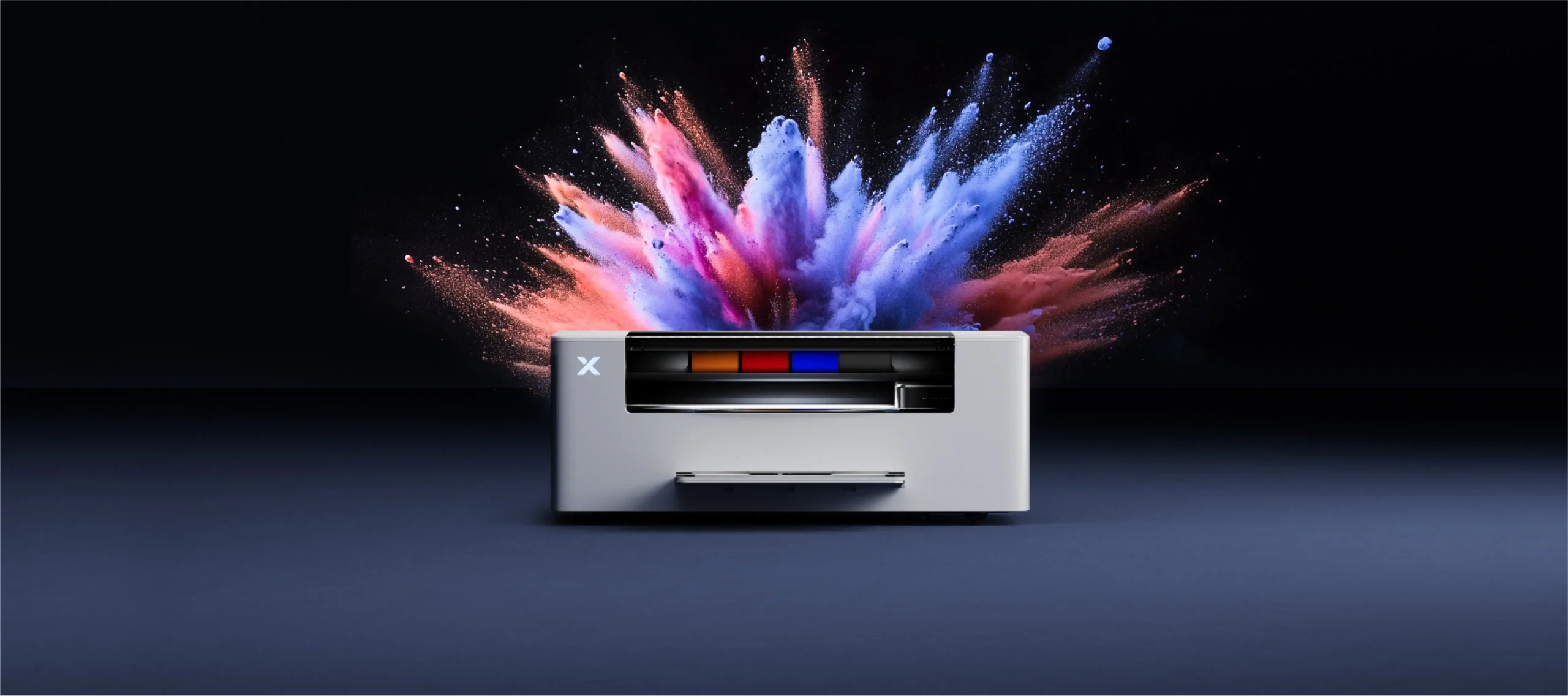
xTool Apparel Printer with colourful ink-inspired background
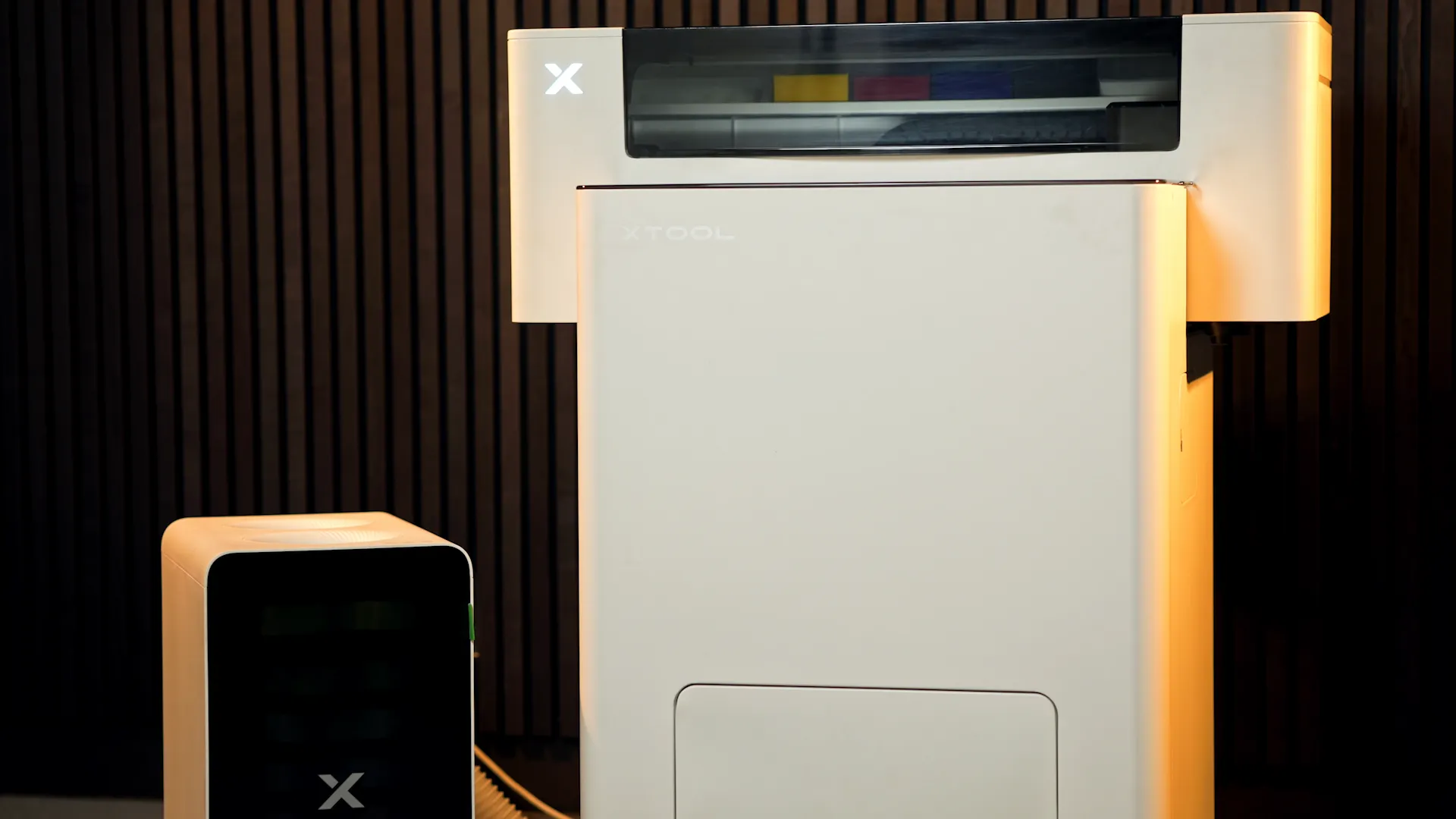
xTool Apparel Printer with xTool OS1 shaker oven

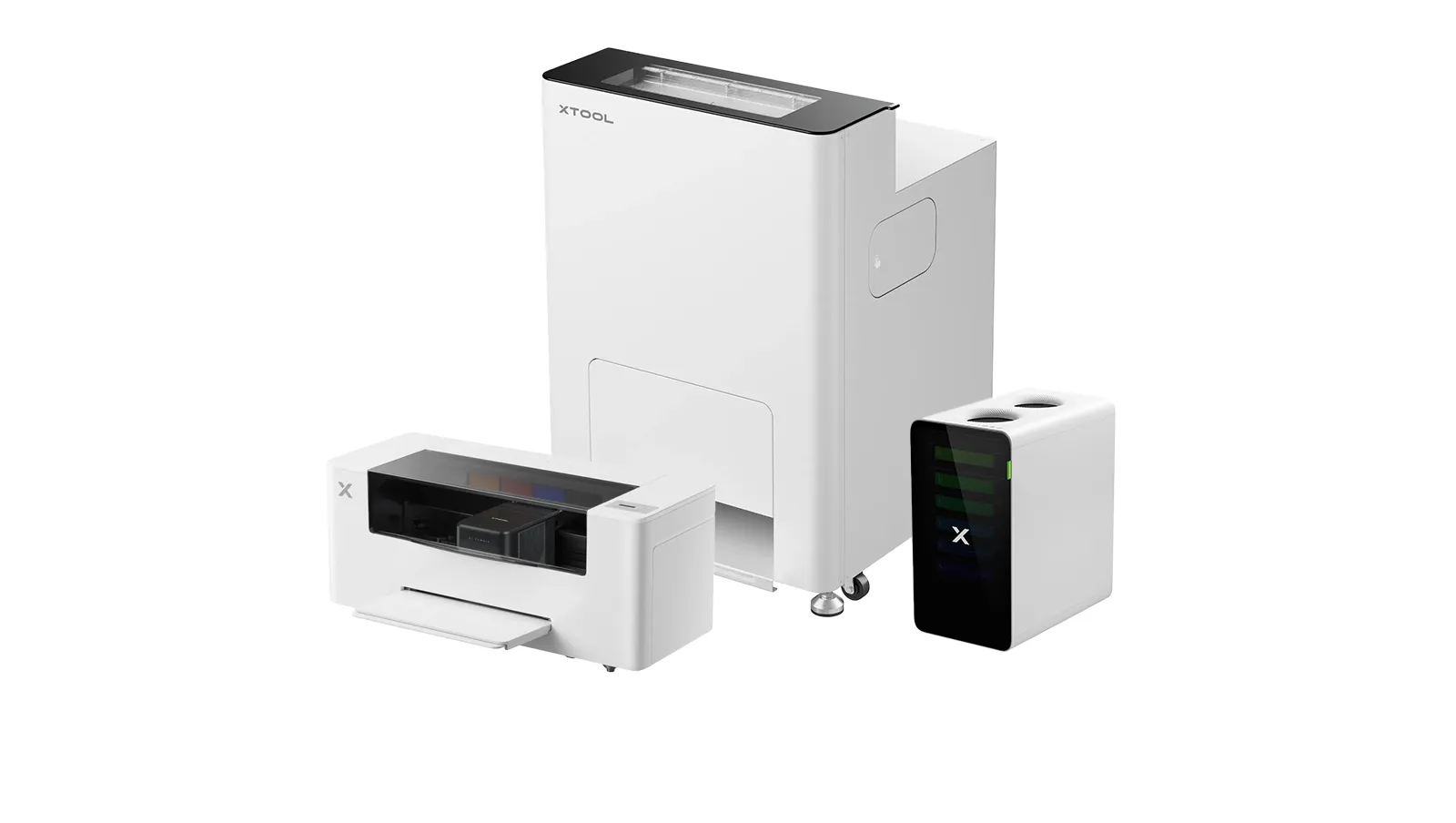
xTool Apparel Printer All-in-1 Bundle
(Air purifier + Auto shaker oven)

R195500 Inc VAT

Repayment option R4681 over 60 months with R35 000 down payment

Consumables – inks, PET films, powders available via MaxLaser.
👉 Flexible financing options available — start your business today with low monthly paymen

Is an A3 DTF Printer Right for Your Business?

Choosing the right DTF printer isn’t just about buying the biggest machine available. It’s about investing in equipment that matches your production goals, available workspace and budget.

An A3 DTF printer is designed for entrepreneurs who want to produce professional-quality apparel without the complexity and investment of a large commercial production system.

If your focus is selling finished garments rather than wholesale transfer prints, an A3 printer is often the smarter choice. It allows you to create personalised clothing on demand, keeping stock levels low while maintaining excellent print quality.

For many startups, this means lower financial risk, easier operation and a faster path to profitability.

Who Should Buy an A3 DTF Printers?

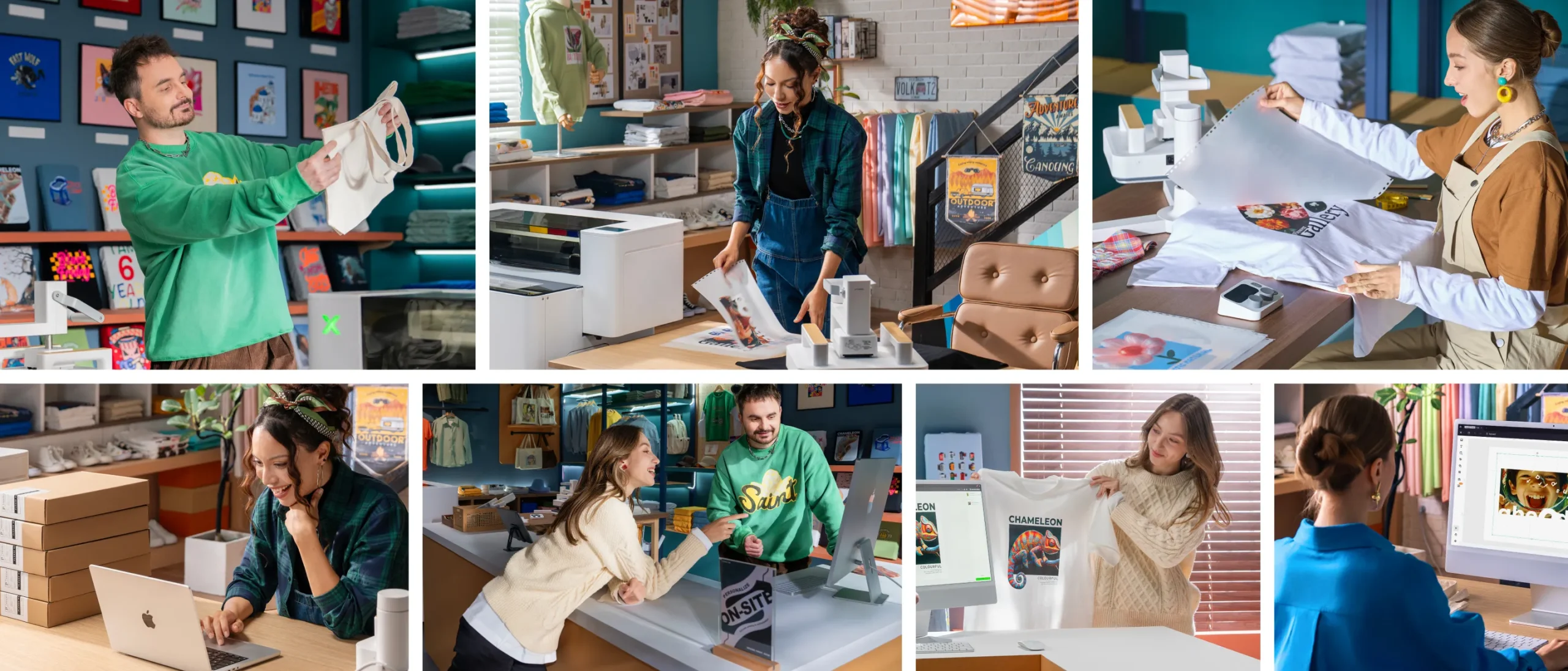
A3 DTF printing workflow for a clothing brand

Clothing Brands

Launching your own clothing brand has never been more accessible. Instead of ordering large quantities from overseas or committing to expensive minimum orders, an A3 DTF printer allows you to produce garments as customers place orders.

Benefits include:

  • Print limited edition collections
  • Test new designs without financial risk
  • Produce one-off personalised garments
  • Control your own production schedule
  • Maintain higher profit margins

Retail Stores

Retail stores can offer personalised apparel while customers wait or collect later the same day.

Popular retail products include:

  • Custom T-shirts
  • Hoodies
  • Golf shirts
  • Caps
  • Tote bags
  • Baby clothing
  • School clothing
  • Sports apparel

Adding on-demand printing creates an additional revenue stream without needing a large production area.

Home Businesses

One of the biggest advantages we found during testing was the compact size of the xTool Apparel Printer.

Unlike industrial DTF systems that often require dedicated production facilities, this machine fits comfortably inside a home office, spare room or garage workshop.

Its professional appearance also means it can be installed in customer-facing environments without looking like heavy industrial equipment.

Promotional Product Companies

If you already produce signage, gifts or promotional products, adding apparel printing allows you to supply a much wider product range to existing customers.

Instead of referring garment work elsewhere, you can keep the work in-house while increasing average order value.

Side Hustles

Many entrepreneurs start by printing evenings and weekends before moving into full-time production.

Because an A3 DTF printer is simple to learn and relatively compact, it’s an excellent platform for:

  • Etsy stores
  • Facebook Marketplace
  • Instagram businesses
  • School fundraising
  • Sports clubs
  • Local events
  • Promotional clothing

xTool Apparel Printer Highlights

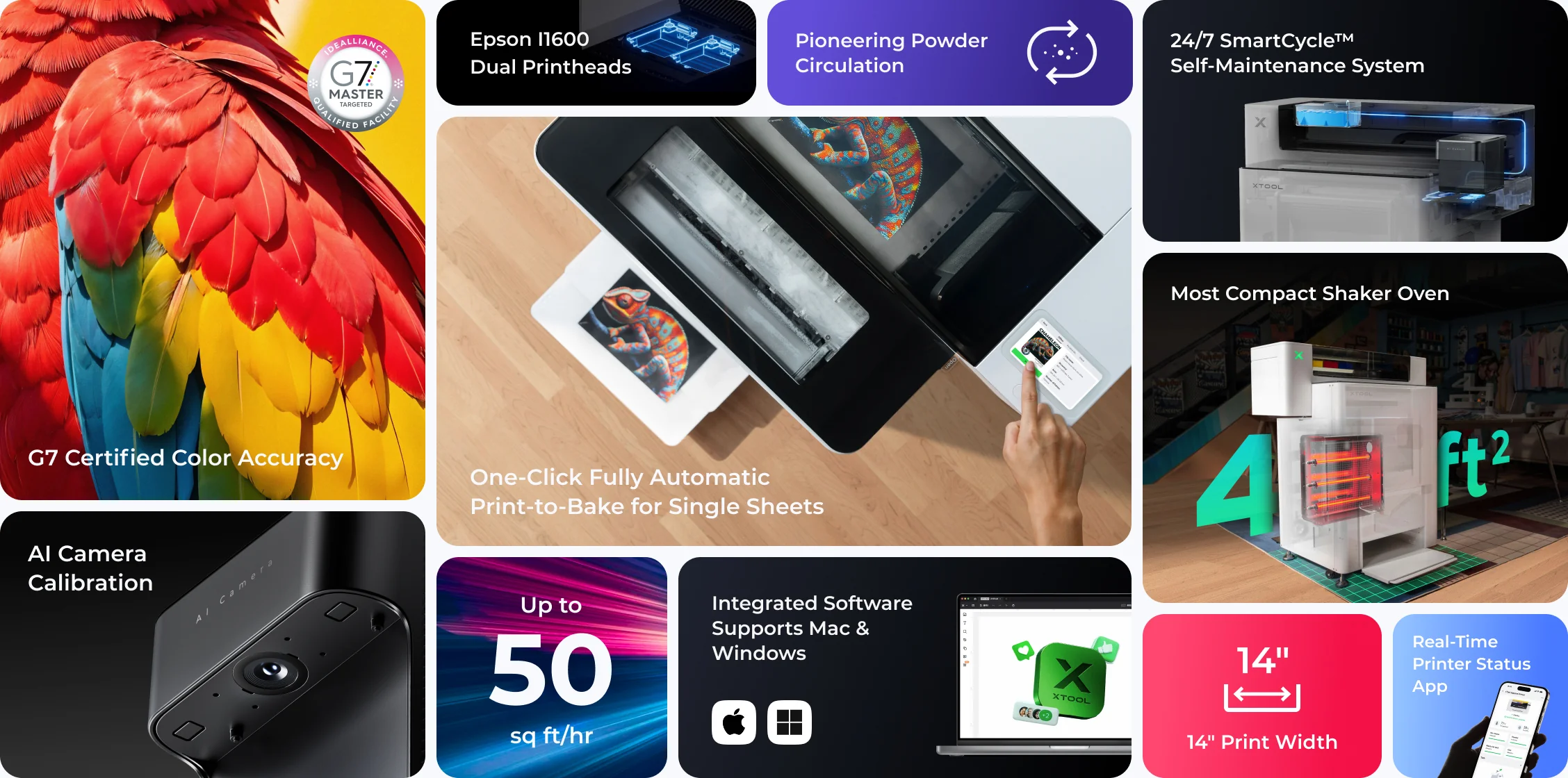
xTool Apparel Printer feature overview showing printheads, maintenance, software, print width and compact shaker oven
xTool Apparel Printer producing a DTF transfer beside folded apparel

What Can You Print?

An A3 DTF printer is capable of producing transfers for a wide range of personalised products.

Popular applications include T-shirts, hoodies, golf shirts, sweatshirts, denim jackets, tote bags, caps, school uniforms, corporate clothing, sportswear, baby clothing, aprons, canvas bags, promotional apparel and event merchandise.

Because every transfer can be customised, businesses can efficiently produce single items, small batches or personalised orders without the setup costs associated with traditional printing methods.

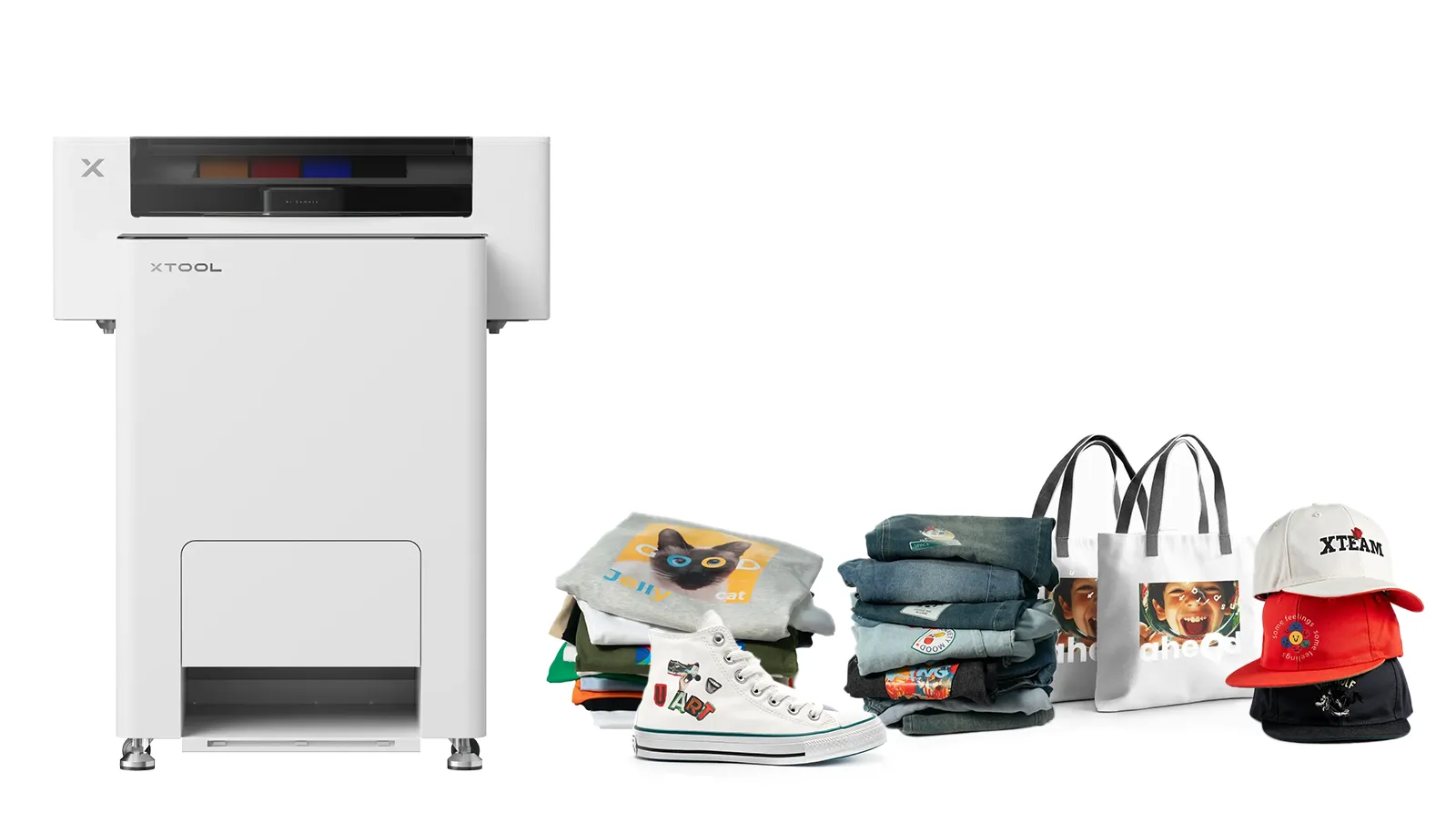
xTool Apparel Printer with customised apparel and accessories

Ready to Start Your Apparel Business?

Whether you’re launching a clothing brand, opening a print shop or adding custom apparel to your existing business, the xTool Apparel Printer offers one of the easiest ways to begin professional DTF printing.

Book a Live Demonstration View Commercial DTF Printers
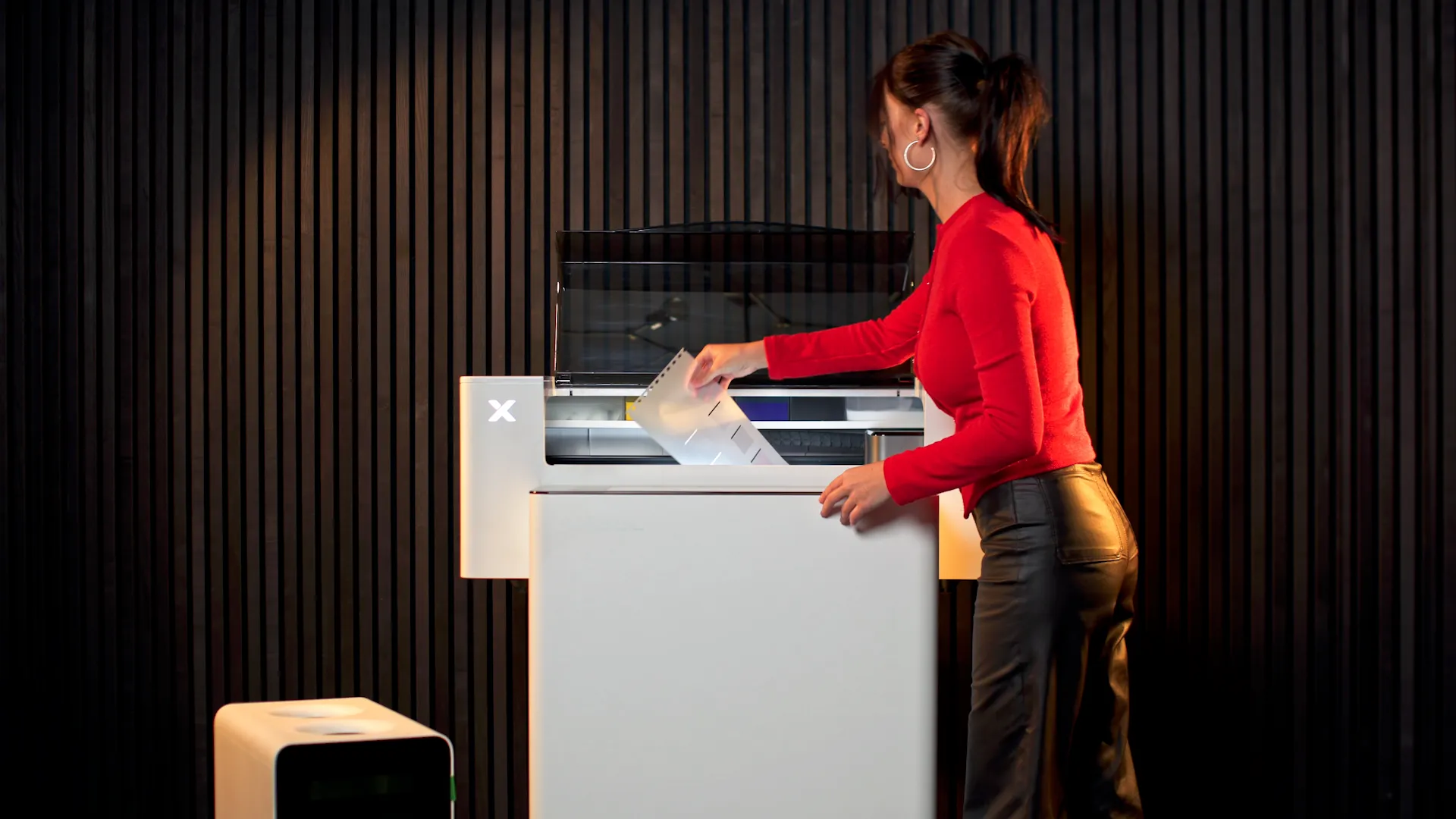
User loading DTF film into xTool Apparel Printer

Our Hands-On Review of the xTool Apparel Printer

Rather than relying solely on manufacturer specifications, we spent time using the xTool Apparel Printer in our own workshop to evaluate how it performs in a real business environment.

Our focus wasn’t simply on print quality. We wanted to understand what the machine is actually like to own and operate—how easy it is to set up, how intuitive the software is, how much maintenance is required, and whether it’s suitable for someone starting their first apparel printing business.

Overall, we were genuinely impressed.

The printer isn’t trying to compete with large industrial DTF production systems. Instead, it has been designed to make professional garment printing accessible to startups, home businesses, retail stores and entrepreneurs who want to produce high-quality apparel without the complexity of larger commercial machines.

What We Liked Most

After using the xTool Apparel Printer, these were the features that impressed us the most:

Extremely Beginner Friendly

One of the easiest DTF printers we’ve used.

Automatic Maintenance

Routine cleaning requires very little user intervention.

Excellent Print Quality

Commercial-quality output with vibrant colours and sharp detail.

Simple Workflow

From setup through to finished garment, the entire production process feels logical and easy to follow.

Compact Footprint

Ideal for businesses where workshop space is limited.

Professional Appearance

Modern design suitable for retail and customer-facing environments.

Indepth Overview of What We Liked Most

Setup Experience

One of the biggest concerns first-time buyers have is whether they’ll be able to set up the printer without specialist knowledge. In our experience, this is one of the xTool Apparel Printer’s greatest strengths.

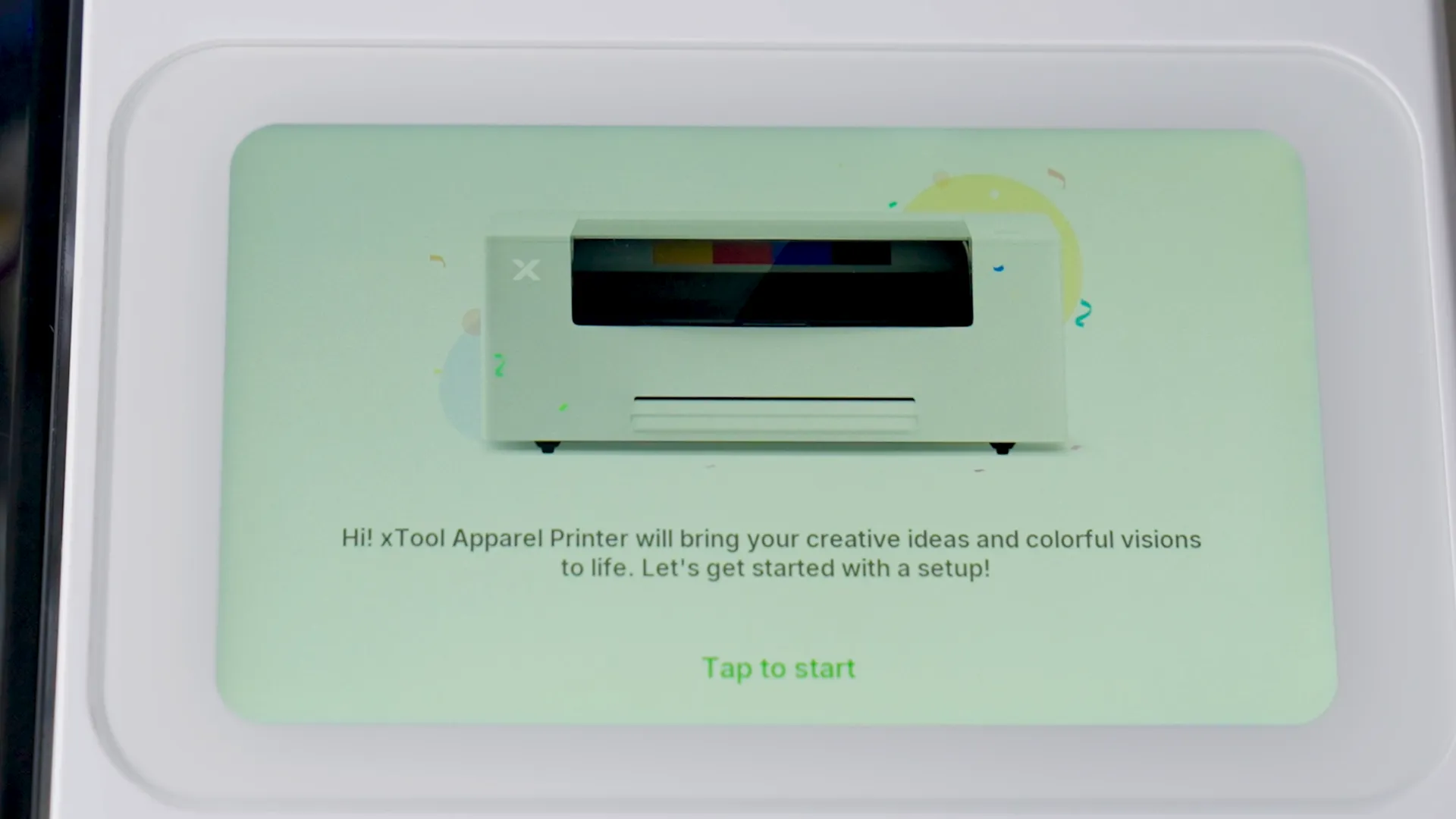
From opening the box to producing our first successful print took approximately one to one-and-a-half hours simply by following the supplied instructions. The setup process is guided step by step, making it approachable even for users with no previous DTF printing experience.

Unlike some commercial systems that require extensive calibration and technical adjustments, the xTool focuses on simplicity and automation.

xTool Apparel Printer touchscreen displaying the guided setup start prompt

What We Liked During Setup

  • Straightforward installation process
  • Guided software
  • Automatic prompts
  • Easy film loading
  • Automatic alignment
  • Minimal opportunity for user error
  • Beginner-friendly workflow

By the end of the setup process, we felt confident enough to begin producing commercial-quality transfers.

Software Designed for Beginners

The software plays a significant role in making the printer approachable. Rather than expecting the operator to remember every production step, the software guides you through the workflow, displaying what needs to happen next. This reduces mistakes and helps build confidence, particularly for first-time users.

For someone starting a clothing brand or home business, this type of guided workflow can significantly reduce the learning curve.

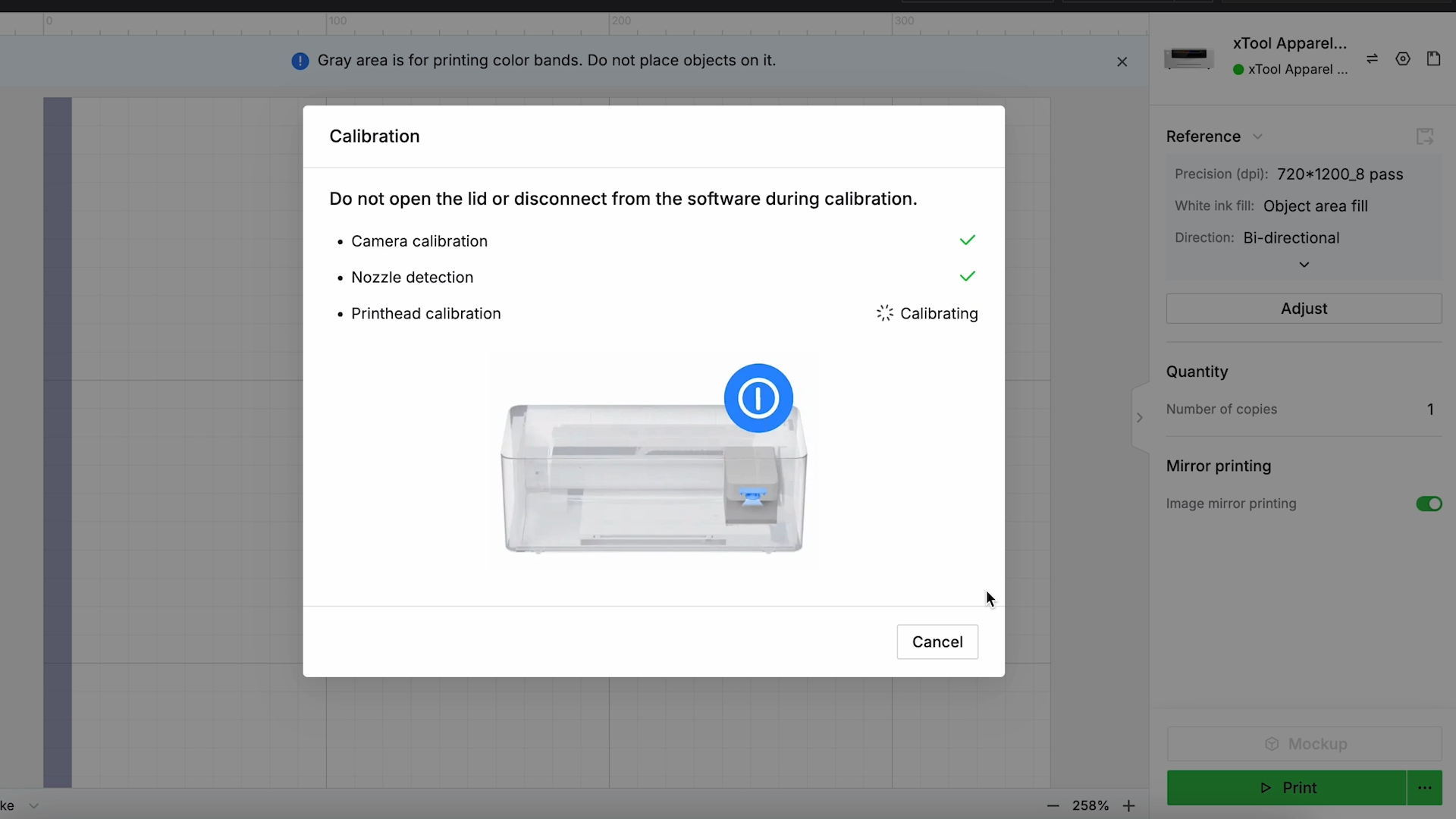
xTool Apparel Printer software calibration screen

Print Quality

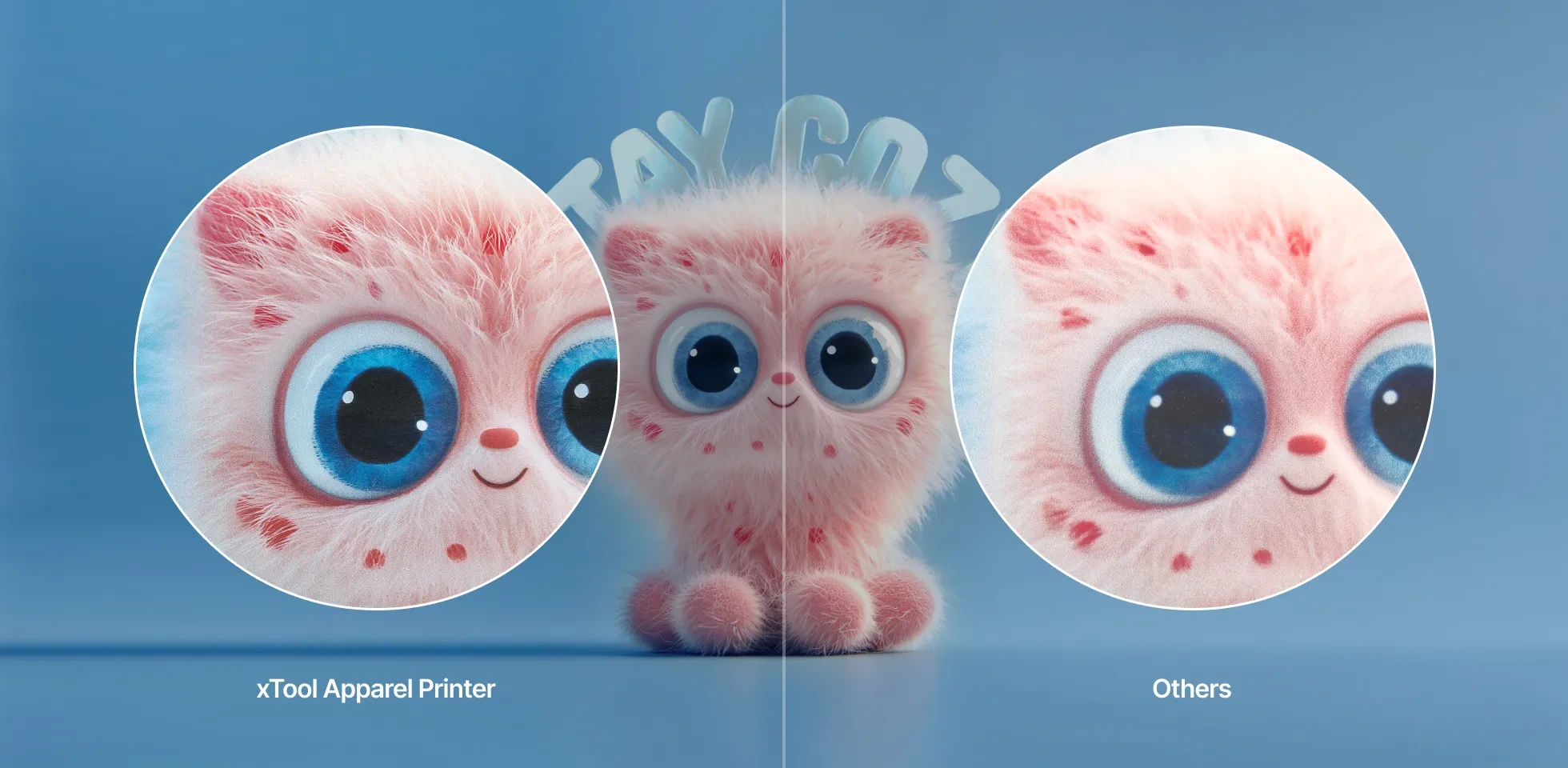
Print quality is ultimately what determines whether customers return. Fortunately, this was another area where the xTool Apparel Printer performed exceptionally well.

Colours appeared vibrant and closely matched the artwork displayed on screen. Fine details remained sharp, gradients reproduced smoothly, and the overall finish looked professional enough for commercial production.

xtool-apparel-printer-clean-workflow.webp

Printing onto Dark Garments

Dark garments often expose weaknesses in DTF systems because they rely heavily on the quality of the white underbase. During our testing, we printed onto black garments using a white underbase.

We observed:

  • Bright, vibrant colours
  • Consistent white coverage
  • No noticeable pinholes
  • Sharp edges
  • Excellent detail

The finished transfers looked clean, vibrant and ready for sale.

How the Finished Transfer Feels

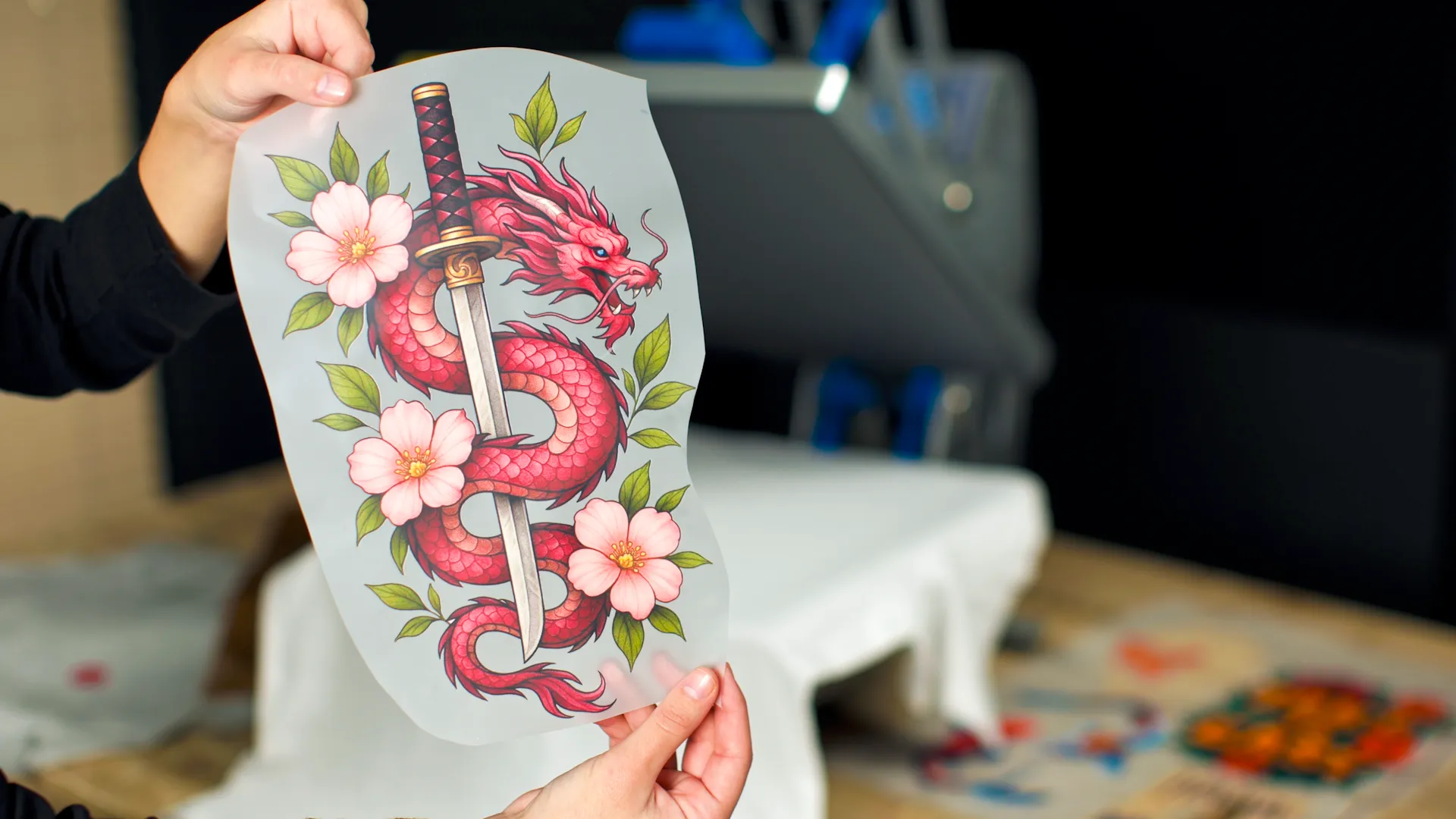
Appearance is important, but so is the feel of the finished garment. The transfers produced by the xTool Apparel Printer had a pleasant finish that felt soft with a slight rubber-like texture—exactly what you’d expect from a quality DTF transfer.

This balance provides durability while maintaining comfort when worn. Customers expect garments that not only look good but also feel premium, and the xTool delivered in both areas.

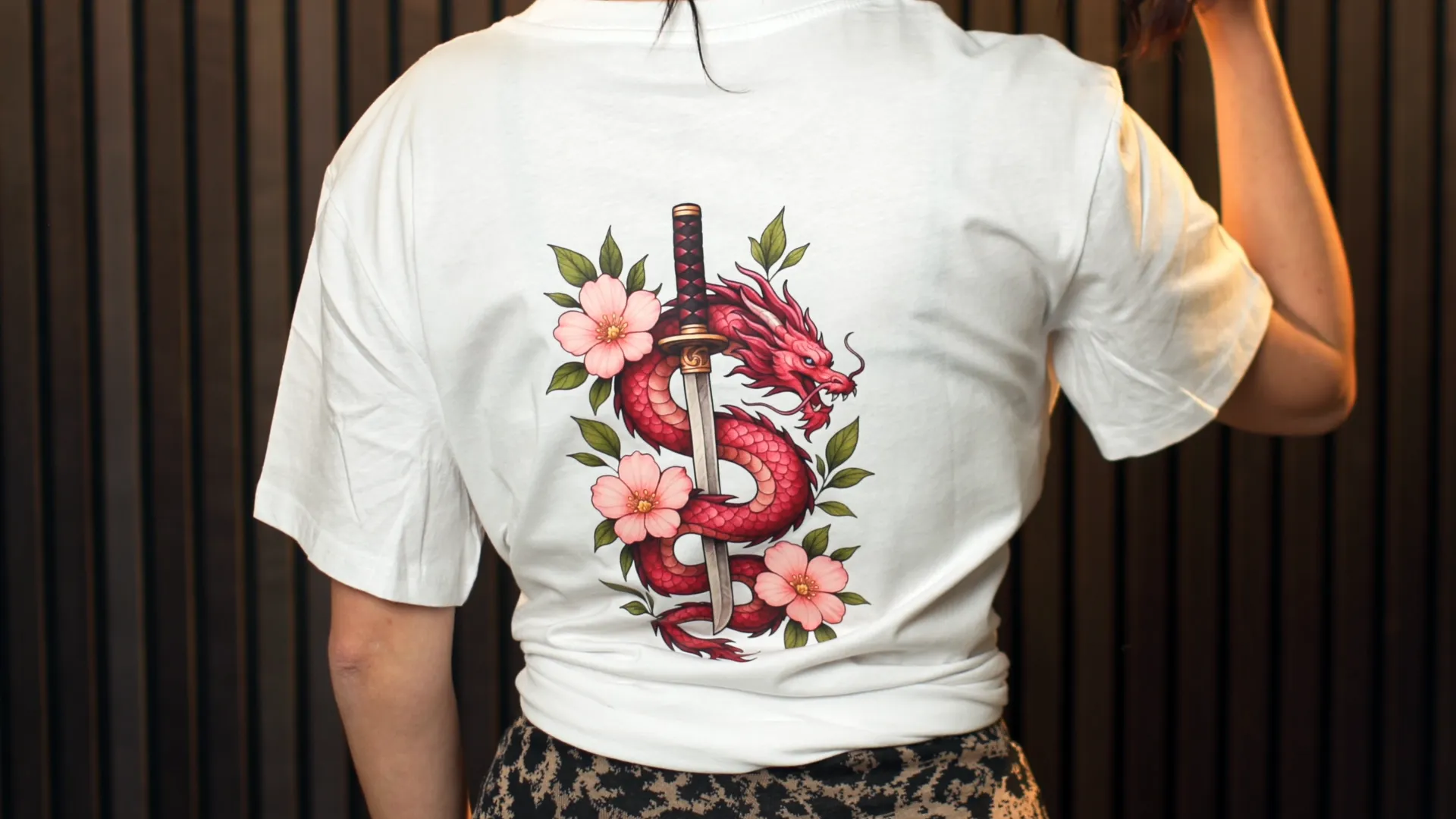
dtf-transfer-dragon-design
White T-shirt with a red dragon, sword and floral DTF print on the front

Printing Speed

The xTool Apparel Printer is designed for startups and small businesses rather than industrial production. With that in mind, we found the production speed to be very respectable.

Typical workflow

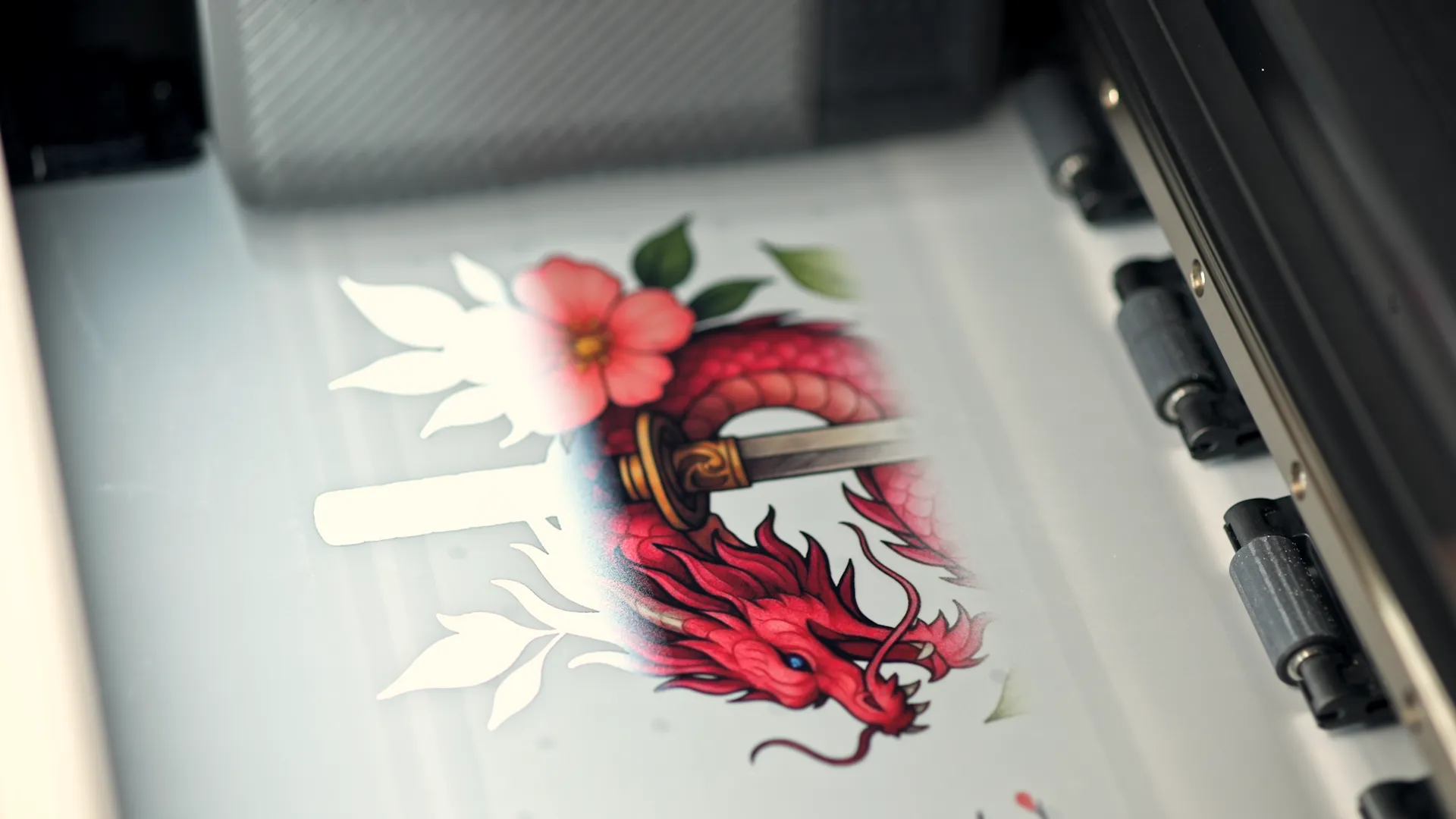
Printing:

Approximately 3 minutes

Powder & Curing:

Approximately 5 minutes

Heat Press:

Approximately 2–5 minutes, depending on your workflow and garment preparation.

xTool Apparel Printer producing a red dragon DTF transfer on film

For personalised clothing, retail orders and small production runs, the machine never felt slow. Instead, it provided a comfortable production pace while maintaining excellent print quality.

Automatic Maintenance

Maintenance is one of the biggest concerns for anyone considering a DTF printer. Fortunately, the xTool Apparel Printer simplifies this process considerably.

The printer features:

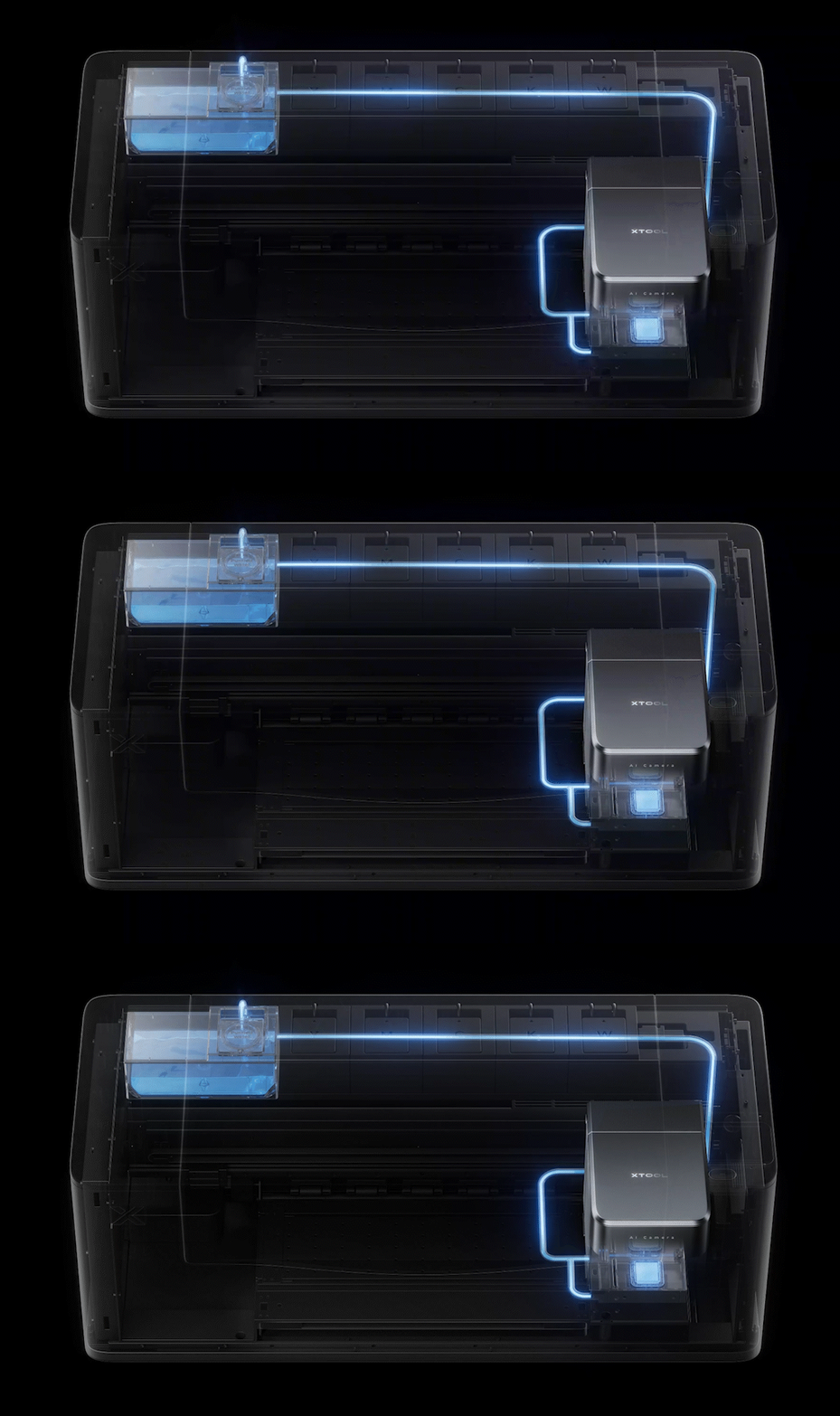
  • Automatic white ink circulation
  • Automatic maintenance cycles
  • Automatic cleaning routines
  • Built-in nozzle checks

When cleaning is required, simply press the cleaning button and allow the printer to complete the process.

Internal view of the xTool Apparel Printer showing the automatic ink circulation path

Cleaning Cycle

The cleaning routine takes approximately: 80 seconds.

After cleaning, a nozzle check confirms that the print head is performing correctly. Occasionally, a second cleaning cycle may be required to achieve a perfect nozzle pattern, but the overall maintenance process remains simple and largely automated.

For beginners, this reduces one of the biggest barriers to entering the DTF printing industry.

xTool Apparel Printer with air purifier

Clean Operation

Another positive observation during our testing was how clean the overall workflow remained.

Compared to some larger industrial DTF systems, we noticed:

  • Minimal escaped powder.
  • No significant smoke escaping during operation.
  • A tidy working environment.
  • Comfortable operation inside smaller spaces.

This makes the printer especially well suited for:

  • Retail stores
  • Home businesses
  • Shopping centres
  • Offices
  • Customer-facing environments

A cleaner workspace is not only more pleasant to work in but also helps create a professional impression when customers visit your premises.

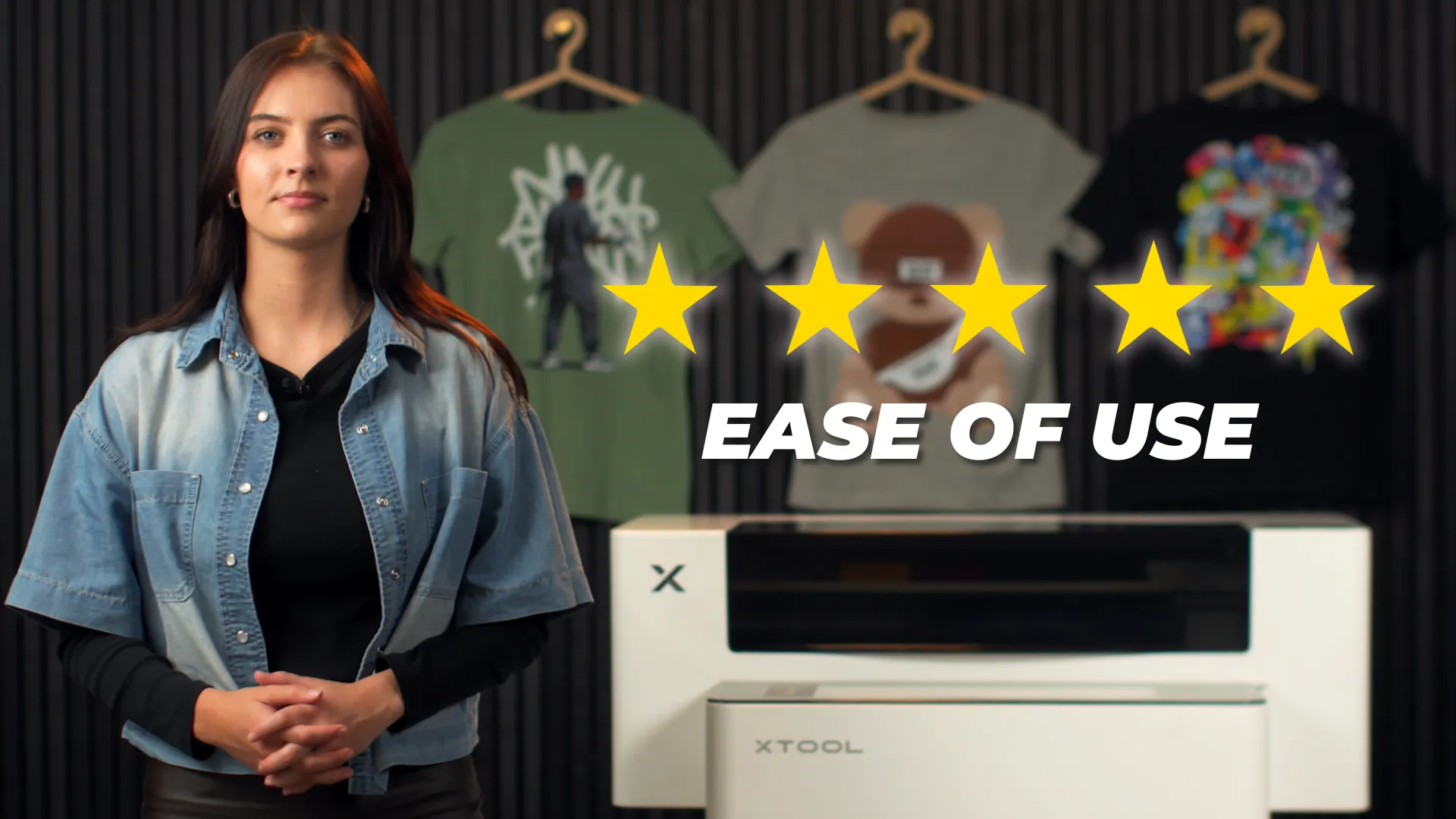
Presenter beside an xTool Apparel Printer with a five-star ease-of-use rating and printed shirts behind her

Our Ratings

Based on our experience using the printer:

Category

Rating

Ease of Use

★★★★★

Print Quality

★★★★☆

Speed

★★★★☆

Maintenance

★★★★★

Value for Money

★★★★☆

Although positioned at the higher end of the entry-level market, we believe the ease of use, build quality and professional results justify the investment for businesses looking for a reliable and user-friendly solution.

Experience the xTool Apparel Printer for Yourself

Reading about a printer is helpful, but seeing it in action is the best way to appreciate its print quality, ease of use and workflow.

Visit our showroom for a live demonstration, ask questions, compare different DTF solutions and discover whether an A3 DTF printer is the right fit for your business.

Book a Live Demonstration
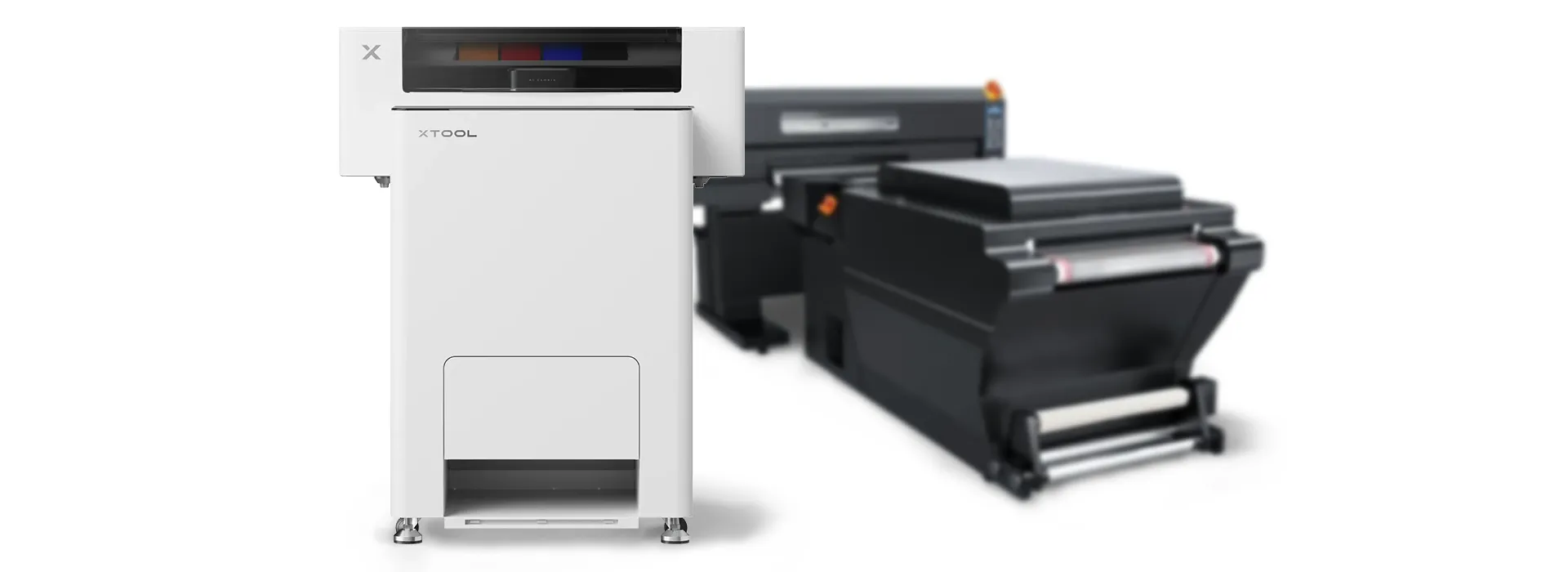
Compact xTool A3 DTF printer shown beside a larger commercial DTF printing system

A3 DTF Printer vs Commercial DTF Printer

One of the most common questions we receive is: “Should I start with an A3 DTF printer, or should I invest in a larger commercial DTF printer?” The answer depends entirely on your business model.

Many first-time buyers assume that purchasing the biggest machine available is the best investment. However, for many startups, this can lead to unnecessary costs, underutilised equipment and a steeper learning curve.

If your goal is to produce high-quality custom garments in manageable quantities, an A3 DTF printer is often the smarter and more cost-effective choice. Commercial DTF printers become the better option once your business reaches a stage where you are producing large volumes of garments or supplying printed transfers to other businesses.

Feature

xTool Apparel

Commercial DTF

Setup

★★★★★

★★★☆☆

Production

★★☆☆☆

★★★★★

Space Required

Small 

Large

Learning Curve

Easy

Moderate

Business Type

A3 DTF Printer

Commercial DTF Printer

Clothing Brand Startup

★★★★★

★★★★☆

Home Business

★★★★★

★★★☆☆


Retail Store

★★★★★

★★★☆☆

Personalised Gifts

★★★★★

★★★★★

Promotional Products

★★★★☆

★★★★☆

School Uniform Printing

★★★☆☆

★★★★★

Sports Clubs

★★★☆☆

★★★★★

Corporate Clothing

★★★☆☆

★★★★★

Selling DTF Transfers

★★☆☆☆

★★★★★

High Volume Product

★★☆☆☆

★★★★★


A3 DTF Printer vs Commercial DTF Printer

One of the most common questions we receive is: “Should I start with an A3 DTF printer, or should I invest in a larger commercial DTF printer?” The answer depends entirely on your business model.

Many first-time buyers assume that purchasing the biggest machine available is the best investment. However, for many startups, this can lead to unnecessary costs, underutilised equipment and a steeper learning curve.

If your goal is to produce high-quality custom garments in manageable quantities, an A3 DTF printer is often the smarter and more cost-effective choice. Commercial DTF printers become the better option once your business reaches a stage where you are producing large volumes of garments or supplying printed transfers to other businesses.

Choose according to your expected order volume and workflow.

A3 ★★★★★ / Commercial ★★★★☆

Confirm workspace and operational requirements.

A3 ★★★★★ / Commercial ★★★☆☆

Assess your order mix and customer collection workflow.

A3 ★★★★★ / Commercial ★★★☆☆

Assess the selected route against actual volume and material workflow.

A3 ★★★★★ / Commercial ★★★★★

Assess both routes alongside your order mix.

A3 ★★★★☆ / Commercial ★★★★☆

Assess seasonal volume and workflow.

A3 ★★★☆☆ / Commercial

Assess order size and deadlines.

A3 ★★★☆☆ / Commercial ★★★★★

Assess order size and workflow.

A3 ★★★☆☆ / Commercial ★★★★★

A3 ★★☆☆☆ / Commercial ★★★★★

Discuss a larger commercial DTF system.

A3 ★★☆☆☆ / Commercial ★★★★★

When Should You Upgrade?

Every successful apparel business starts somewhere. Many businesses begin with an A3 DTF printer because it allows them to build a customer base without making a large upfront investment. As demand grows, you may eventually reach a point where producing larger transfer rolls becomes more efficient.

Typical signs that it’s time to upgrade include:

  • You’re printing continuously throughout the day.
  • Customers regularly order large production runs.
  • You begin supplying printed transfers to other businesses.
  • Production deadlines become difficult to meet.
  • You’re employing additional staff.
  • You require wider printable media and higher daily output.

Until then, an A3 DTF printer remains an excellent solution for producing premium finished garments with minimal complexity.

Why Selling Finished Garments Is More Profitable

One of the biggest advantages of owning an A3 DTF printer is the ability to sell finished products rather than just printed transfers.

Instead of competing on transfer pricing alone, you’re providing a complete solution that includes:

  • The garment
  • The custom print
  • Design assistance
  • Personalisation
  • Fast turnaround
  • Professional presentation

This creates more opportunities to increase your profit margins while delivering greater value to your customers.

For startups, this approach often leads to stronger customer relationships and repeat business.

Products You Can Create

Examples of apparel and accessories made with DTF printing

Clothing

  • T-shirts
  • Hoodies
  • Golf shirts
  • Sweatshirts
  • Jackets
  • Baby clothing
  • Children’s clothing

Business & Corporate

  • Staff uniforms
  • Corporate apparel
  • Promotional clothing
  • Event merchandise
  • Workwear

Sports & Schools

  • Team shirts
  • School uniforms
  • Club apparel
  • Sportswear
  • Supporter merchandise

Promotional Products

  • Tote bags
  • Aprons
  • Canvas bags
  • Drawstring bags
  • Fabric gift bags

Why Buy Your A3 DTF Printer from MaxLaser?

Buying a printer is only the beginning. At MaxLaser, our goal is to help customers build profitable printing businesses, not simply sell equipment.

Maxlaser installation and training

Delivery & Remote Training

Lifetime technical support

Lifetime Technical Support

Maxlaser Local South African Support, Stock & Spares

Local South African Stock & Spares


Maxlaser support: hands-on demo facility in Johannesburg

Hands-On Demo Facility

Maxlaser's real business setup guidance

Real Business Setup Guidance

MaxLaser warranty and after-sales

Warranty & After-Sales Backup

Learn More with MaxLaser Academy

Purchasing an A3 DTF printer also gives you access to valuable educational resources through the MaxLaser Academy.

Continue building your skills with training on DTF printing fundamentals, artwork preparation, colour management, heat pressing techniques, business advice, marketing your clothing brand, AI tools for business and CorelDRAW training.

Our aim is to give you the confidence to grow your business long after your printer has been installed.

Frequently Asked Questions

Yes. An A3 DTF printer is an excellent choice for startups, home businesses and small apparel brands. It allows you to produce professional-quality custom garments without investing in a large commercial production system. As your business grows and daily production increases, you can later upgrade to a larger commercial DTF printer.

You can print transfers for T-shirts, hoodies, golf shirts, jackets, tote bags, aprons, sportswear, school uniforms, workwear, baby clothing and many other fabric products. DTF printing works on both light and dark garments and is compatible with cotton, polyester and most fabric blends.

The exact number depends on the size of the design, your workflow and operator experience. Based on our testing, printing and curing a transfer takes around 8 minutes, while heat pressing the garment takes approximately 5 minutes. In a typical eight-hour working day, a single operator can realistically produce around 30 to 35 finished T-shirts while allowing time for artwork preparation, loading garments, trimming transfers and general workflow.

If your business reaches the point where you’re consistently exceeding this output, it’s usually a good indication that you’re ready to upgrade to a larger commercial DTF printer designed for higher-volume production.

Yes. One of the biggest advantages of the xTool Apparel Printer is its beginner-friendly workflow. The guided software, automatic maintenance features and compact design make it much easier for first-time users to learn compared to many commercial DTF systems.

No. While basic design knowledge is helpful, many beginners quickly learn using software templates, AI design tools and simple artwork. Training through MaxLaser Academy can also help you build your confidence and improve your skills.

Absolutely. Unlike traditional screen printing, DTF printing is perfect for one-off personalised garments as well as small production runs, making it ideal for custom clothing businesses.

The printer performs many maintenance tasks automatically, significantly reducing daily operator involvement. However, like any professional printing equipment, regular cleaning and following the recommended maintenance schedule will help ensure consistent print quality and reliability.

When applied correctly using the correct heat press settings, DTF transfers produce vibrant, flexible prints with excellent wash durability. The finished prints resist cracking and peeling under normal washing conditions.

Yes. DTF printing works exceptionally well on black and dark-coloured garments because the printer lays down a white ink layer beneath the colour image, allowing vibrant colours to stand out.

DTF transfers can be applied to cotton, polyester, poly-cotton blends and many other textile materials without requiring different inks or complicated setup changes.

Yes. After printing the transfer onto DTF film and curing the adhesive powder, you’ll need a heat press to permanently transfer the design onto the garment.

Yes. Many businesses sell printed transfers to customers who already own heat presses. Others use the printer to produce finished garments, which generally offers higher profit margins and greater value for customers.

The compact footprint makes it suitable for home businesses, retail stores, shopping centres, creative studios and small workshops where space is limited.

You should consider upgrading when you’re printing continuously throughout the day, regularly producing large production runs, supplying printed transfers to other businesses or when customer demand consistently exceeds the capacity of an A3 printer.

MaxLaser provides far more than just the machine. We offer installation assistance, training, lifetime technical support, local stock of consumables and spare parts, access to MaxLaser Academy and ongoing guidance to help you build a successful printing business.

Not necessarily—it depends on your business. If you’re starting a clothing brand, running a home business or producing smaller custom orders, the xTool Apparel Printer is often the better choice because it’s easier to operate, requires less space and has a lower upfront investment. If you’re producing hundreds of garments every day or supplying transfers wholesale, a larger commercial DTF printer will be the more suitable option.

Ready to Start Your Clothing Brand?

Whether you’re printing your first custom T-shirt or launching a new apparel business, the xTool Apparel Printer makes professional garment printing simple, accessible and enjoyable.

Book a live demonstration and experience the printer for yourself.

Book a Live Demonstration View Commercial DTF Printers