DTF Printers South Africa – From Compact to Commercial Printing

Explore DTF printers for everything from personalised apparel and small-business production to high-volume commercial printing. Compare the xTool Apparel Printer, MaxColour 40 and MaxColour 60 to find the right DTF solution for your business.

DTF, or Direct-to-Film, printing lets you print full-colour designs onto transfer film and heat-press them onto a wide range of garments and fabrics. It is suited to custom T-shirts, hoodies, workwear, sportswear, promotional clothing and ready-to-press DTF transfers for resale.

Book a Live Demo
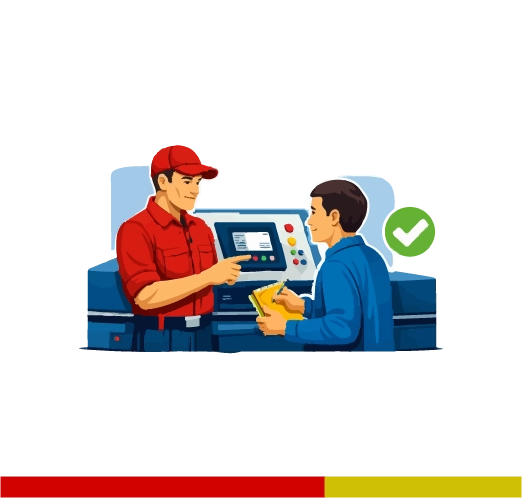
MaxLaser technician providing machine installation and operator training

Installation & training

Technical support
Nationwide Delivery

Two Ways to Build a Business With a DTF Printer

A DTF printer can generate revenue by producing finished branded apparel or by supplying ready-to-press DTF transfers to other businesses and resellers. Watch how these two business models can work together.
Explore Our DTF Printer Range

MaxLaser offers DTF printing solutions for different stages of business growth, from compact garment printing to higher-volume commercial DTF production. Choose according to the transfer sizes you want to produce, expected production volume and whether you will print finished garments, supply DTF transfers, or both.

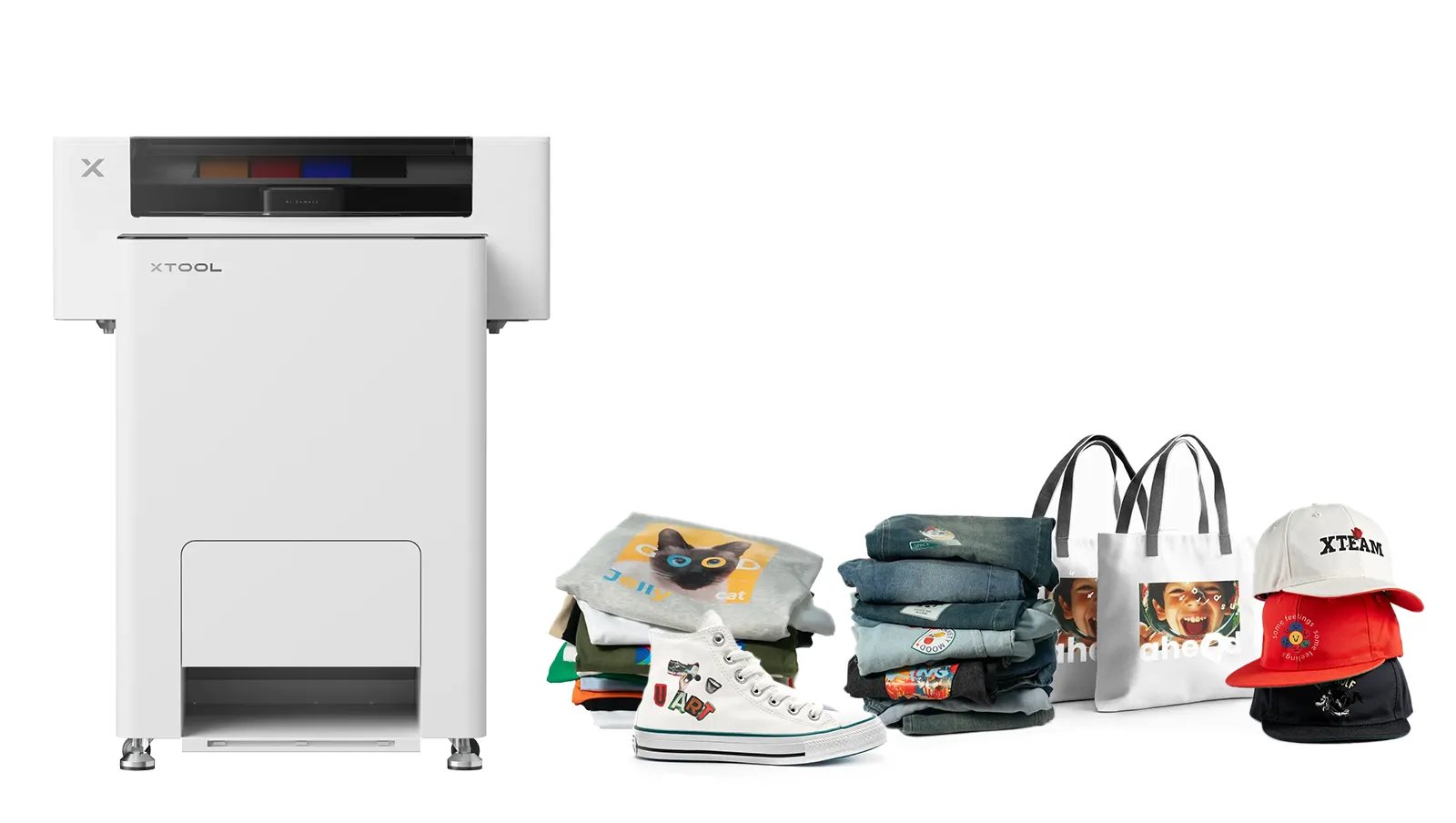
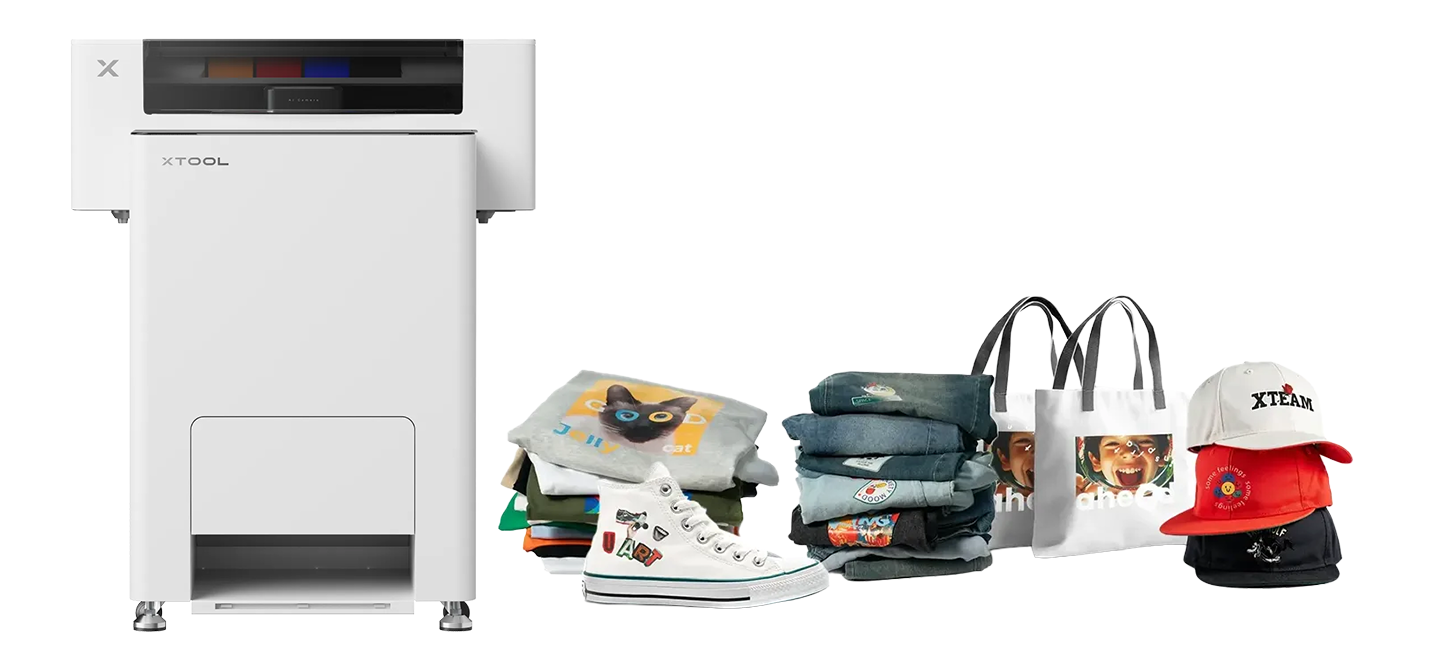
White xTool Apparel Printer compact DTF system with custom-printed T-shirts, tote bags, caps and a sneaker

xTool Apparel Printer — Compact DTF Printer

Best for: Startups, small businesses and lower-volume garment production.

The xTool Apparel Printer is MaxLaser’s compact DTF printing solution for businesses entering garment printing without immediately investing in a larger roll-fed commercial system.

From R195 500 Inc VAT

OR
R4681 over 60 months with R35 000 down payment

Print width: 356 mm
Production level:
Compact / small business

Its compact format suits personalised clothing, custom T-shirts, small orders and businesses where workspace and ease of operation matter.

Ideal for:

  • Startups and home-based businesses
  • Personalised clothing
  • Custom T-shirts and apparel
  • Short production runs
  • Businesses with limited workspace
View the xTool Apparel Printer
MaxColour 40 commercial DTF printer with examples of custom printed apparel, bags, workwear, towels and promotional products

MaxColour 40 — Commercial DTF Printer

Best for: Growing garment-printing businesses and commercial production.

The MaxColour 40 is a commercial roll-fed DTF printer for businesses that have moved beyond smaller-format production and need a more continuous printing workflow.

From R225 300 Inc VAT

OR
R5021 pm over 72 months with a R35 000 down payment

Print width: 400 mm
Production level: Commercial

Its 400 mm print width provides additional capacity for garments and ready-to-press DTF transfers.

When used with its powder shaking and curing system, transfers can move through printing, powdering and curing as a continuous commercial workflow.

Ideal for:

  • Growing garment-printing businesses
  • Regular commercial orders
  • Clothing brands
  • Print shops
  • DTF transfer production
  • Businesses moving beyond compact DTF production
View the MaxColour 40
MaxColour 60 high-volume commercial DTF printer with custom printed clothing, workwear, bags, caps and promotional products

MaxColour 60 — High-Volume Commercial DTF Printer

Best for: High-volume DTF production and transfer suppliers.

The MaxColour 60 is MaxLaser’s larger commercial DTF printing solution, with a 600 mm print width for businesses requiring greater production capacity. The wider roll format allows more transfers across the media width and suits established garment printers, busy print shops and businesses producing DTF transfers for resale.

From R280 200 Inc VAT

OR
R6470 pm over 72 months with a R35 000 down payment

Print width: 600 mm
Production level: High-volume commercial

Used with an automated powder shaker and curing system, the MaxColour 60 is designed around continuous commercial production rather than individual sheet-based printing.

Ideal for:

  • High-volume garment printing
  • Established print businesses
  • Large clothing orders
  • DTF transfer suppliers
  • Gang-sheet production
  • Businesses requiring greater production capacity
View the MaxColour 60
Dual-station heat press shown alongside examples of custom printed products, including clothing, mugs, tumblers, phone cases, bags, notebooks, puzzles and home décor.

Heat Press Machines — Finish Every DTF Transfer

Best for: Applying DTF transfers and producing customised garments and products.

MaxLaser offers a range of heat press machines for different production needs, from single-station and double-station garment presses to versatile 16-in-1 systems. Whether you’re producing T-shirts, workwear, promotional products or other customised items, choose a heat press that matches your application and production volume.

From R7700 Inc VAT

Explore all MaxLaser heat press machines

T-SHIRT HEAT PRESS MACHINES

Which DTF Printer Is Right for Your Business?

The right DTF printer depends on more than print size. Consider how many transfers you expect to produce, the orders you want to accept, available workspace and how quickly demand may grow.

Feature

xTool Apparel Printer

MaxColour 40

MaxColour 60

Printer type

Compact DTF

Roll-fed DTF

Roll-fed DTF

Format / print width

Compact format

400 mm

600 mm

Business level

Startup / small business

Commercial

High-volume commercial

Production style

Smaller batches

Continuous production

Continuous production

Best for

Personalised garments and smaller orders

Growing print businesses

Larger-volume production

Transfer reselling

Smaller quantities

Well suited

Excellent for volume

Workspace required

Compact

Larger production area

Larger production area

Powder and curing workflow

Configuration-dependent compact workflow

Automated commercial workflow

Automated commercial workflow

Upgrade path

First DTF setup

Moving beyond compact production

Scaling commercial production

You are starting a garment-printing business, working with smaller quantities or want a compact DTF solution before moving to a larger roll-fed system. It is well suited to personalised clothing, custom T-shirts and smaller customer orders.

Your business needs more capacity than a compact system can comfortably provide and you want to move into a continuous roll-fed DTF workflow. The 400 mm print width makes the MaxColour 40 a strong step into commercial DTF production without immediately moving to the larger 600 mm format.

DTF production is becoming a major part of your business and output capacity is a priority. Its 600 mm print width is better suited to larger production runs, gang sheets and businesses supplying ready-to-press DTF transfers to other garment decorators and print businesses.

Think About Where Your Business Is Going

Buying the largest DTF printer is not automatically the right decision. A smaller system can make more sense when order volumes are still developing, while an undersized printer can become a production bottleneck once demand increases. Consider your current order volume, expected growth, available workspace, transfer sizes and whether you plan to sell finished garments, DTF transfers, or both. MaxLaser can help you compare the xTool Apparel Printer, MaxColour 40 and MaxColour 60 based on your expected production requirements.

Learn how to start a DTF printing business Book a Live Demo

A3 vs Commercial DTF Printers — What’s the Difference?

xTool Apparel Printer shown beside a larger commercial roll-fed DTF printer and curing system for production comparison.

The main difference between a compact A3-category DTF printer and a commercial roll-fed DTF printer is the production workflow. A compact system such as the xTool Apparel Printer is suited to startups, smaller businesses and lower-volume garment printing, with lower workspace requirements than a commercial roll-fed setup.

Commercial DTF printers such as the MaxColour 40 and MaxColour 60 provide wider roll-fed formats. Combined with automated powder shaking and curing equipment, they support a continuous workflow better suited to regular commercial orders and DTF transfer production at scale.

When Should You Move From A3 to a Commercial DTF Printer?

Consider a commercial DTF printer when:

  • Your existing printer can no longer comfortably keep up with orders.
  • You regularly need larger quantities of transfers.
  • You want to produce gang sheets more efficiently.
  • DTF transfer reselling is becoming an important part of your business.
  • Production speed and workflow efficiency are becoming more important.
  • You need the additional print width of a 400 mm or 600 mm system.

There is no need to start with a commercial DTF printer simply because it is larger. The right machine matches your current production requirements while providing a sensible path to grow.

xTool Apparel Printer shown with custom printed T-shirts, tote bags, caps and shoes for personalised apparel production.

Want to Know if a Compact DTF Printer Is Right for You?

Read our complete xTool Apparel Printer guide for a closer look at compact DTF printing, its production considerations and who it suits.

xTool Apparel Printer guide

Why Buy a DTF Printer From MaxLaser?

Buying a DTF printer is more than purchasing a machine. Installation, training, technical support and access to consumables can all affect how successfully you operate the equipment after purchase. MaxLaser supplies DTF printing equipment to businesses across South Africa with support intended to help customers move their machines into production.

Professional Installation

MaxLaser’s commercial MaxColour 40 and MaxColour 60 DTF systems include installation and training. The printer, powder shaker and curing system are set up as a production workflow so the equipment can be prepared for training and production.

Trainer demonstrating DTF transfer film to a learner

Hands-On DTF Training

Commercial DTF printing involves more than pressing a print button. MaxLaser provides two to three days of installation and training with its larger DTF systems, covering the printing workflow, machine operation, RIP software, powder and curing process, heat pressing, routine maintenance and important operating procedures. Confirm the exact training scope for the selected configuration before purchase.

Technical Support

Support does not end once installation and training are complete. MaxLaser provides lifetime WhatsApp support for the commercial MaxColour systems, including assistance with machine operation, troubleshooting and technical questions.

Shield protecting a compact DTF printer, representing one-year warranty coverage

One-Year Machine Warranty

MaxColour commercial DTF printer product pages state a one-year warranty. Confirm the current warranty terms and exclusions for your selected configuration before purchase.

DTF Consumables & Equipment

Keeping DTF production running requires access to the products used every day. MaxLaser supplies DTF consumables and supporting equipment, including DTF inks, transfer film and heat presses.

MaxLaser Academy icon representing machine training, skills development and business education.

MaxLaser Academy

Customers can continue developing machine, design and business skills through MaxLaser Academy. The aim is not only to supply equipment, but to help customers understand their workflow and build a sustainable printing operation.

What Is a DTF Printer?

A DTF printer, or Direct-to-Film printer, creates full-colour transfers that can be heat-pressed onto garments and other suitable fabric products. Instead of printing directly onto the garment, the design is printed onto specialised PET transfer film using coloured and white DTF inks.

An adhesive powder is applied to the printed transfer and cured with heat. The prepared transfer is then positioned on the garment and applied with a heat press, transferring the printed design onto the fabric.

DTF printing can be used on cotton, polyester, poly-cotton blends and many other suitable fabrics, including light and dark garments. This makes it suitable for personalised clothing, small print runs, commercial garment production and ready-to-press DTF transfers.

Watch: What Is DTF Printing?

See the DTF printing process in action and learn how a design moves from digital artwork to a finished garment.

Explore what DTF printing is before choosing a workflow or machine.

How Does DTF Printing Work?

DTF printing uses a digital workflow to turn artwork into a ready-to-press transfer for clothing and other suitable fabric products. Unlike direct-to-garment printing, the printer does not print directly onto the garment.

Tablet and stylus used to create a colourful transfer design

1. Create Your Design

Prepare the artwork digitally using suitable design software. DTF printing can reproduce full-colour graphics, logos, text, detailed artwork and photographic designs.

Direct-to-film printer feeding a colourful transfer film sheet

2. Print Onto DTF Transfer Film

Print the design onto specialised PET transfer film using DTF inks. The printer produces the colour image followed by a white ink layer that creates the base needed for vibrant results on light and dark garments.

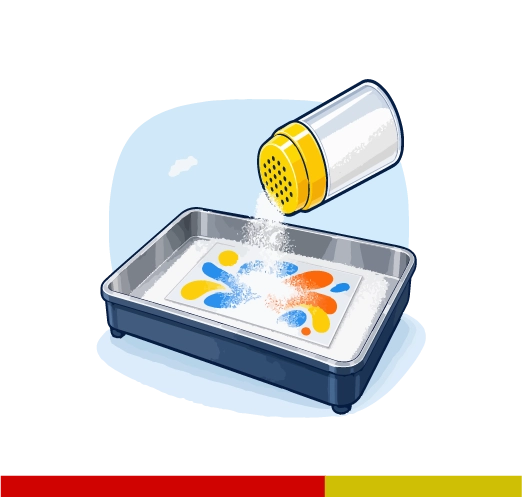
Adhesive powder being applied to a DTF transfer sheet

3. Apply DTF Adhesive Powder

While the ink is still wet, apply specialised hot-melt adhesive powder to the printed area. The powder bonds to the ink and allows the finished transfer to adhere to fabric.

4. Cure the Transfer

Heat the printed film and adhesive powder to cure the transfer. Commercial DTF systems can automate this with a powder shaker and curing unit, allowing the printed film to move continuously from printing through curing.

Heat press applying a colourful DTF transfer to fabric

5. Heat Press the Design

Position the cured DTF transfer on the garment and apply it with a heat press. The correct temperature, pressure and pressing time help create a strong bond between the transfer and the fabric.

6. Peel and Finish

Remove the PET film using the recommended peeling method. Depending on the transfer and application, a final press may improve the finish and durability.

The result is a full-colour garment print without screens or the cutting and weeding required for individual vinyl designs.

Black T-shirts, black hoodie and canvas tote bag with colourful custom DTF prints, displayed alongside transfer film sheets.

Why Choose DTF Printing?

DTF printing combines full-colour digital printing, flexible production quantities and compatibility with a wide range of fabrics. It can suit startups producing customised clothing as well as commercial print businesses producing garments or DTF transfers at higher volumes.

Different fabric swatches with colourful DTF transfer patterns

Print on a Wide Range of Fabrics

DTF transfers can be applied to cotton, polyester, poly-cotton blends and other suitable fabrics, giving businesses flexibility across fabric types and garment colours.

Vibrant Full-Colour Prints

DTF printers can reproduce colourful artwork, gradients, fine details, logos and photographic designs. White DTF ink provides an underbase that helps colours remain vibrant on dark garments.

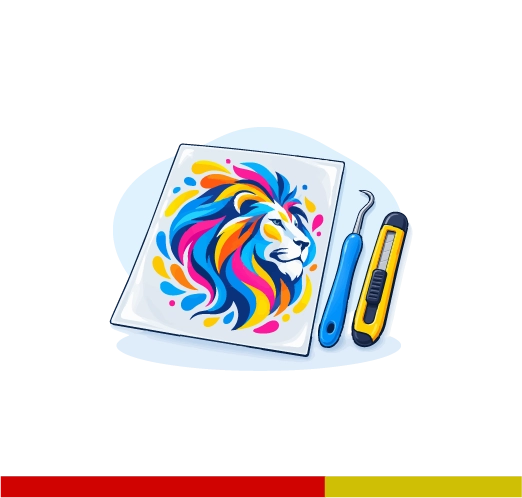
Completed colourful DTF transfer beside unused vinyl-weeding tools

No Cutting or Weeding

Unlike heat-transfer vinyl, DTF designs do not need to be individually cut and weeded before application. Detailed and multi-colour artwork can be printed as a complete transfer, helping simplify production.

Small and larger colourful DTF transfer sheets shown together

Suitable for Small or Large Orders

Because DTF printing is digital, there is no need to create screens for each design. This makes it practical for one-off personalised garments, short production runs and larger commercial orders.

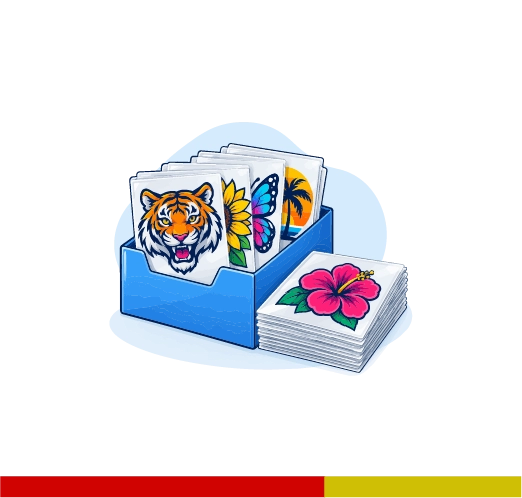
Ready-to-press DTF transfer sheets stored separately from a heat press

Produce Transfers Now, Press Them Later

DTF transfers can be produced separately from the final garment-printing process. This allows businesses to create ready-to-press transfers that can be stored and heat-pressed when required, separating transfer production from garment fulfilment.

Sell Ready-to-Press DTF Transfers

You do not have to sell finished clothing to build a DTF business. DTF printers can also produce ready-to-press transfers for clothing brands, print shops and businesses that own heat presses but do not have their own DTF printer. This creates a business model focused on producing and supplying transfers while customers handle final garment pressing.

Explore DTF transfer business guidance
Compact and larger DTF printer formats shown side by side

Scale as Your Business Grows

DTF printing can suit different stages of a printing business. A compact xTool Apparel Printer can suit smaller businesses and lower-volume production, while the MaxColour 40 and MaxColour 60 offer wider commercial DTF formats for businesses that need greater production capacity.

What Can You Print With a DTF Printer?

A DTF printer is a versatile T-shirt printing machine that can produce full-colour designs for many clothing and fabric products. Designs can include logos, text, detailed artwork, photographs and personalised graphics.

DTF transfers can be applied to cotton, polyester, poly-cotton blends and many other suitable fabrics, making DTF printing practical for light and dark garments.

Watch: What Can You Print With a DTF Printer?

See products and designs that can be produced with DTF printing, from personalised T-shirts and clothing to commercial garment production.

T-Shirts & Fashion Apparel

Custom T-shirts are one of the most popular DTF applications. A DTF printer and heat press create a flexible setup for one-off personalised shirts through to larger clothing orders. Full-colour artwork, logos, photographs, text and detailed graphics can be transferred to suitable garments without the cutting and weeding associated with heat-transfer vinyl.

Hoodies & Sweatshirts

DTF transfers can be applied to hoodies, sweatshirts and other suitable clothing for fashion brands, personalised apparel and branded merchandise.

Workwear & Corporate Clothing

Businesses can produce branded workwear and corporate clothing with company logos, employee names and promotional designs.

Sportswear & Team Clothing

DTF printing can be used for suitable sportswear, team clothing, club apparel and event garments where full-colour logos, names and graphics are required.

Tote Bags & Fabric Products

DTF is not limited to clothing. Suitable fabric products such as tote bags can also be personalised with ready-to-press DTF transfers.

School, Club & Event Apparel

Schools, clubs, organisations and events often require smaller quantities of customised garments, making DTF particularly useful where designs or quantities may change between orders.

MaxColour DTF printer in a garment printing workspace, surrounded by T-shirts featuring vibrant custom printed designs.

From Personalised T-Shirts to Commercial DTF Production

A DTF printing business can start with personalised T-shirts and smaller garment orders and expand into larger commercial production as demand grows. Businesses can also use their DTF printing equipment to produce ready-to-press DTF transfers for other clothing businesses, print shops and customers who already own a heat press. The right DTF printer will depend on the size of the products you want to print, your expected order volumes and whether your business will focus on finished garments, DTF transfers, or a combination of both.

What Do You Need for DTF Printing?

A complete DTF setup involves more than the printer. To produce a finished garment, you need DTF inks, transfer film, DTF powder, a curing process and a heat press working together. The exact equipment depends on whether you choose a compact DTF system or a commercial roll-fed printer.

The printer creates the full-colour design and white ink layer on specialised transfer film. MaxLaser offers the compact xTool Apparel Printer and commercial MaxColour 40 and MaxColour 60 roll-fed DTF printers.

DTF printers use specialised CMYK and white inks. CMYK inks create the colour artwork, while white ink provides the underbase needed for vibrant transfers on light and dark garments.

The design is printed onto specialised PET DTF transfer film rather than directly onto the garment. The film carries the print through powdering and curing before the transfer is heat-pressed onto the garment.

Hot-melt DTF powder is applied to wet ink on the transfer film. It adheres to the printed areas and creates the adhesive layer that bonds the design to fabric during heat pressing.

Commercial DTF systems such as the MaxColour 40 and MaxColour 60 work with an automated powder shaker and curing system. As printed film enters the shaker, powder is applied to the wet print; excess powder is shaken off and recovered before the remaining powder is cured onto the printed design.

This creates a continuous roll-fed workflow. Compact systems can use a different powdering and curing workflow depending on their configuration.

A heat press is essential to the DTF process. Once a transfer has been printed, powdered and cured, the press applies controlled heat and pressure to transfer the design to the garment. Correct temperature, pressing time and pressure help create a consistent, durable finished print.

Explore MaxLaser heat press machines. For higher-volume garment pressing, see the Shirt Heat Press Machine MAX-HSS Double Location; for a versatile multi-application setup, see the 16 in 1 Heat Press MAX-HSD330.

Artwork is created in suitable design software, while RIP software manages printing functions such as colour output and the white ink layer required for DTF production.

MaxColour DTF printer with CMYK and white DTF inks, adhesive powder and transfer film for garment printing.

For commercial production, choosing equipment that works efficiently together is as important as choosing the DTF printer. MaxLaser can help businesses put together a DTF setup based on the products they want to produce and expected production requirements.

Print Smarter. Press with Confidence. Grow Your Apparel Business.

DTF printing gives businesses a flexible way to produce custom apparel and branded products, but consistent results depend on more than the printer. Good training helps you understand workflow, garment choices, transfers, and what customers actually want to buy. 

MaxLaser Academy helps you move from beginner to confident DTF user with practical training, real support, and guidance built around apparel production and business growth.

Explore MaxLaser Academy Browse All Articles

DTF Printer FAQs

A DTF printer prints a full-colour design onto PET transfer film, which is powdered, cured and heat-pressed onto a suitable garment or fabric product.

DTF printers can produce transfers for suitable T-shirts, hoodies, workwear, sportswear, tote bags, school clothing, club apparel and other fabric products.

Yes. A heat press applies the cured DTF transfer to the garment using controlled heat and pressure.

A compact DTF printer can suit startups and lower-volume personalised apparel, while MaxColour 40 and MaxColour 60 roll-fed systems suit businesses that need wider commercial formats and continuous production workflows.

Yes. DTF printers can produce ready-to-press transfers for businesses and customers who already own heat presses and will complete the final garment pressing themselves.

Transfer cost depends on design size, ink coverage, film, powder, electricity, labour, maintenance and production waste. Finished-garment sellers must also account for the blank garment.

Continue Learning graphic featuring a blue laser machine icon working over an open book, with bold orange “CONTINUE LEARNING” text.

DTF Learning Centre

Build your DTF knowledge before choosing a system or planning your next production step.

Ready to Start or Grow Your DTF Printing Business?

Whether you are considering the compact xTool Apparel Printer, stepping up to the MaxColour 40, or need the capacity of the MaxColour 60, MaxLaser can help you compare the options against what you want to print and your expected production volume.

Book a Live Demo