Metal Laser Cutting Machines

Cut metal with speed and precision using the professional Thunder AccuMetal fibre laser cutting range. Compare two working areas for sheet-metal fabrication, manufacturing, signage and custom production. The right choice depends on your materials, component size and production needs.

VIEW METAL LASER CUTTING MACHINES
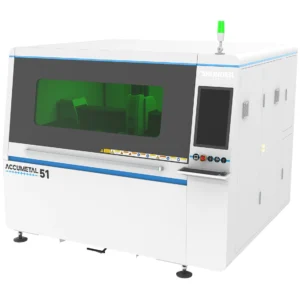
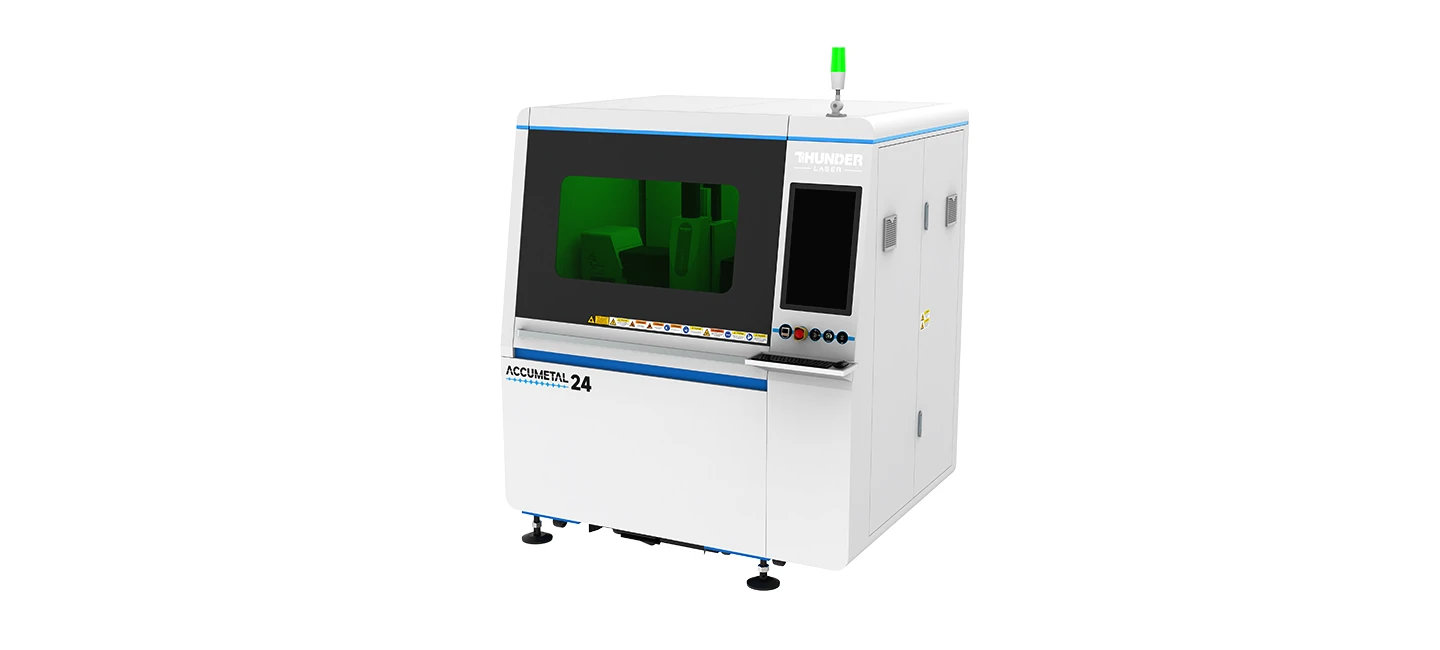
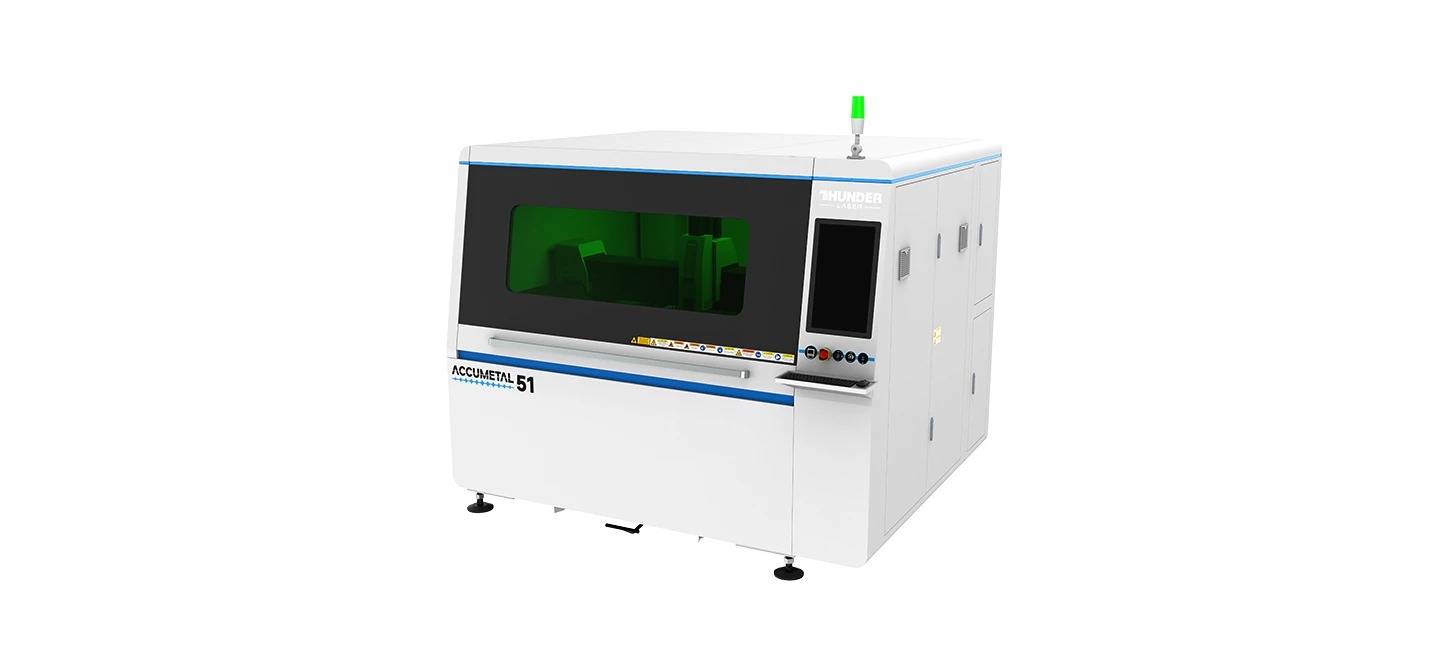
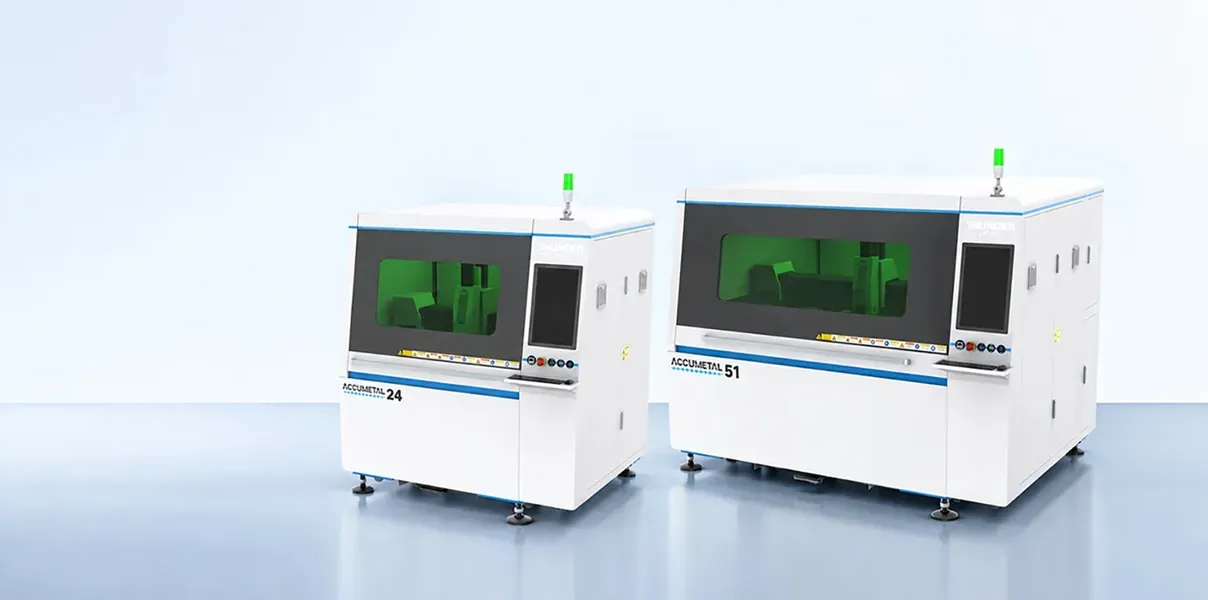
Accumetal 24 and Accumetal 51 enclosed metal laser cutting machines.

Find The Right Metal Laser Cutting Machine

Start with the metals you need to cut, their usual thickness, the size of your parts and your expected production volume. The AccuMetal 24 offers a compact 610 × 610 mm working area; the AccuMetal 51 provides a larger 1300 × 1300 mm area. 

Not sure which suits your application? Compare the machines below, then tell MaxLaser what you intend to make.

3-in-1 metal laser cutting machine

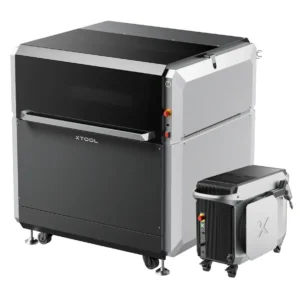
xTool MetalFab 1200W

R395,000.00 Inc Vat

A powerful 1200W fibre laser welding and cutting machine designed for professional metal fabrication. The xTool MetalFab combines precision CNC metal cutting with handheld laser welding and cleaning capabilities. Ideal for producing custom metal components, signage and fabricated products, it’s perfect for engineering workshops, manufacturers & businesses seeking versatile metal work solutions.

Best for
  • Professional Metal Fabrication
  • Engineering & Manufacturing
Product features
  • 1200W Fibre Laser Technology
  • 3-in-1 Welding, Cutting & Cleaning
  • Laser type: Fibre
  • Laser power: 1.2kW
  • Working area: 610 x 610 mm
  • Cutting Speed: Up to 20m/min
  • Assist Gases: Air, Nitrogen, Oxygen
  • Repeat Positioning Accuracy: ±0.02 mm

Finance from R9,500 /month

72 months R35,000 down payment

metal laser cutting machine

AccuMetal 24

R469,000.00 Inc Vat

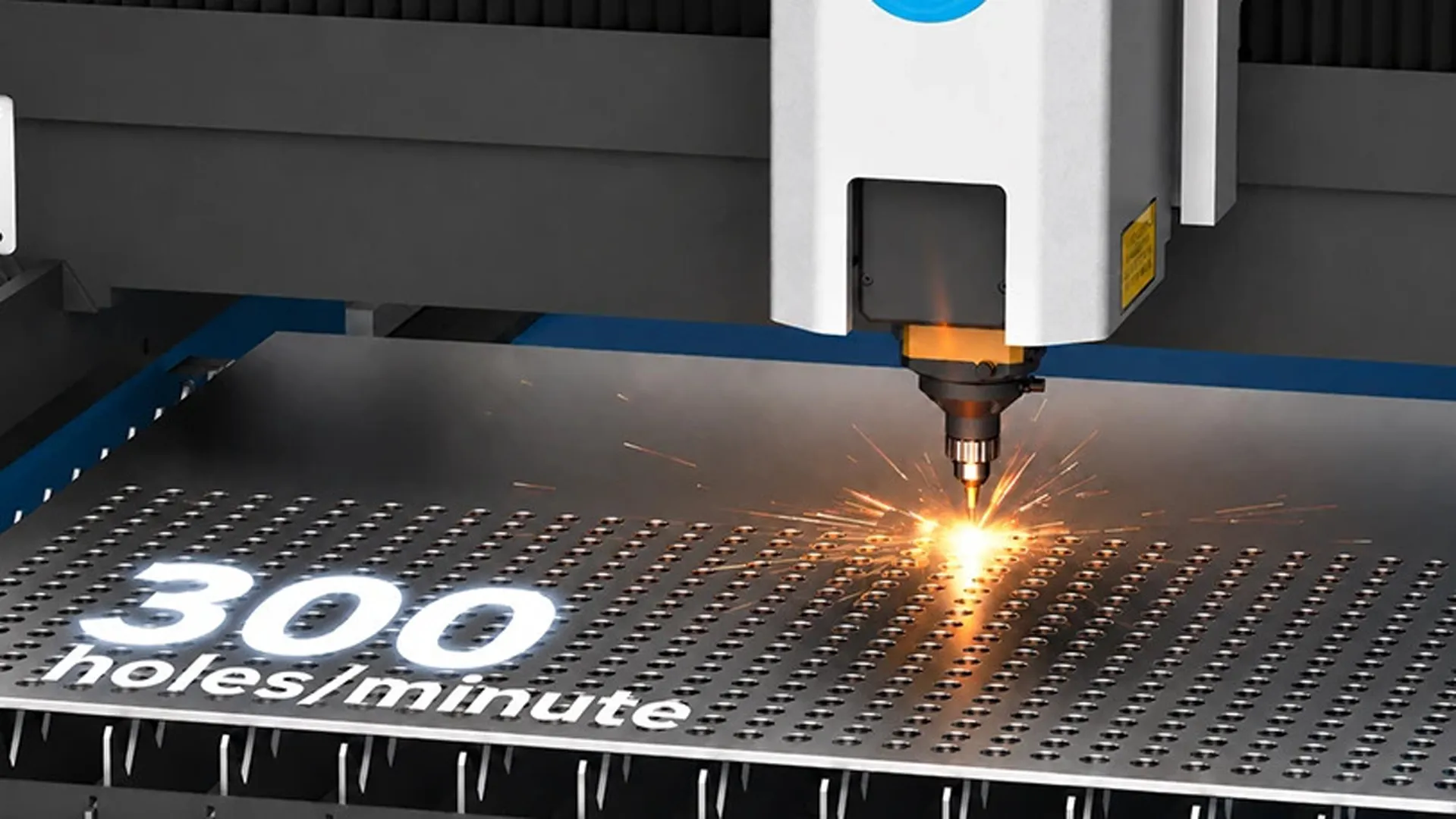
A professional metal laser cutting machine designed for precision cutting of sheet metal and custom metal components. The Thunder Laser AcuMetal 24 is ideal for producing signage, decorative metalwork, brackets and fabricated parts with clean, accurate results. Perfect for engineering workshops, metal fabrication businesses and manufacturers looking to expand their production capabilities.

Best for
  • Precision Sheet Metal Cutting
  • Engineering & Metal Fabrication
Product features
  • Precision Metal Laser Cutting
  • Compact Metal Cutting System
  • Laser type: Fibre
  • Laser power: 1.5kW
  • Working area: 610 x 610 mm
  • Cutting Speed: Up to 30m/min
  • Assist Gases: Air, Nitrogen, Oxygen
  • Repeat Positioning Accuracy: ±0.02 mm

Finance from R11,057 /month

72 months R50,000 down payment
metal laser cutting machine

AccuMetal 51

R599,500.00 Inc Vat

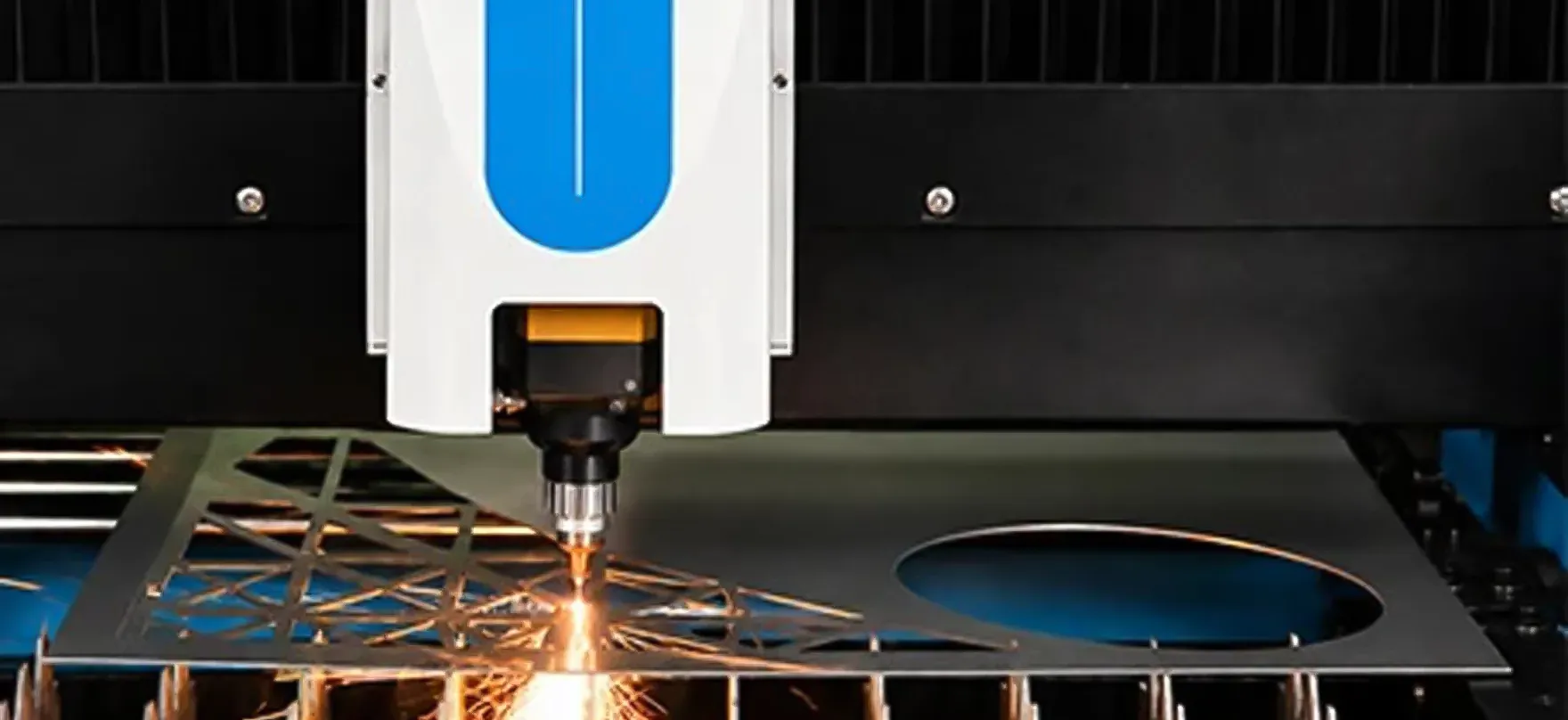
A professional metal laser cutting machine designed for precision sheet metal fabrication and commercial production. The Thunder Laser AccuMetal 51 is ideal for cutting custom metal components, signage, brackets and decorative metalwork. Perfect for engineering workshops, manufacturers and fabrication businesses requiring accurate, consistent cutting results and greater production capacity.

Best for
  • Commercial Sheet Metal Cutting
  • Engineering & Manufacturing
Product features
  • Precision Sheet Metal Cutting
  • Large-Format Cutting Area
  • Laser type: Fibre
  • Laser power: 1.5kW, 3kW
  • Working area: 1300 x 900 mm
  • Cutting Speed: Up to 30m/min
  • Assist Gases: Air, Nitrogen, Oxygen
  • Repeat Positioning Accuracy: ±0.02 mm

Finance from R14,501 /month

72 months R50,000 down payment
Not Sure Which AccuMetal Is Right for You?

Compare working area, the parts you intend to cut and the production demands of your business. Power and cutting capability must be checked against the exact configuration, material and required edge quality.

Speak to a specialist

Explore More About MaxLaser

Compare Our Metal Laser Cutting Machines

The standard AccuMetal 24 and 51 share the same listed laser power, speed and repeat positioning accuracy. The 51’s main standard-range advantage is its much larger working area.

Specification

Thunder AccuMetal 24

Thunder AccuMetal 51

Standard laser power

1.5kW fiber

1.5kW fiber

Working area

610 × 610 mm

1300 × 1300 mm

Repeat positioning accuracy

±0.02 mm

±0.02 mm

Maximum machine speed

Up to 30 m/min

Up to 30 m/min

Maximum acceleration

Up to 2.0 G

Up to 1.8 G

Assist gases

Air, oxygen, nitrogen

Air, oxygen, nitrogen

Best for

Compact precision metal cutting

Larger format metal cutting

Production fit

Smaller parts and flexible production

Larger components and larger sheet layouts

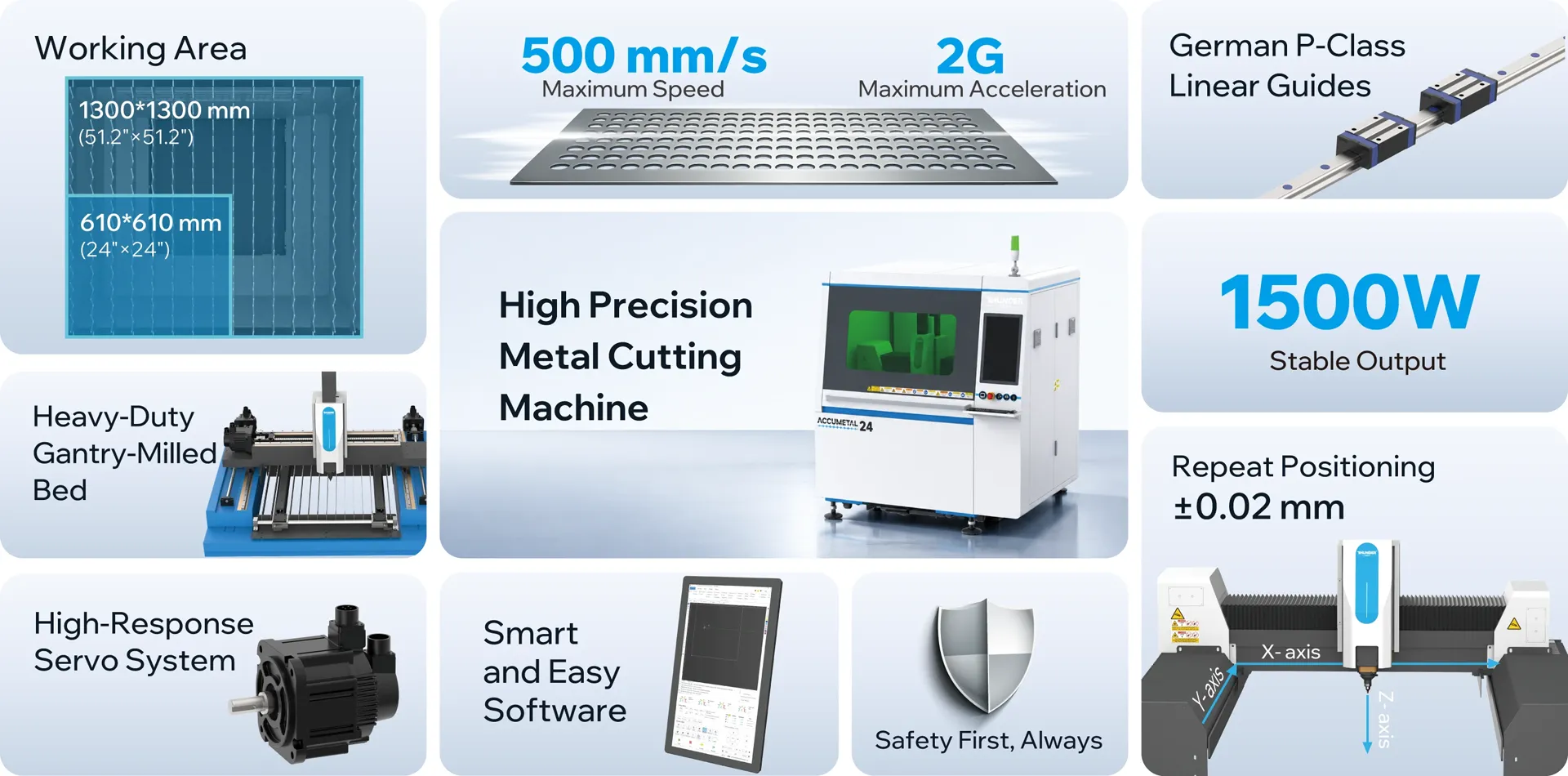
Thunder Laser AccuMetal 24 metal laser cutting machine with working area, speed, precision, servo system and linear guide features.
Thunder Laser AccuMetal 24 enclosed metal laser cutting machine

AccuMetal 24 — Compact and Capable

Choose the AccuMetal 24 when your products fit within its 610 × 610 mm working area and you want a compact platform for smaller parts. For the standard 1.5kW series, Thunder’s current technical table lists clean-cut, no-dross limits of 6 mm carbon steel and 5 mm stainless steel. Its separate cut-through-only limits are 15 mm and 10 mm respectively. These are series references, not a guaranteed result for your job; confirm the process for your material and required finish.

Thunder Laser AccuMetal 51 enclosed metal laser cutting machine

AccuMetal 51 — More Working Area

Choose the AccuMetal 51 when you need a 1300 × 1300 mm working area for larger components or sheet layouts. Its standard laser power is also 1.5kW. If your materials and normal thickness call for more power, discuss Thunder’s optional 3kW configuration and obtain confirmed cutting data for that configuration before deciding.

Need Help Comparing Them?

Tell MaxLaser the metals, grades, thicknesses, largest component size and expected production volume. We can help you assess the AccuMetal configuration that fits your application.

Help me choose

Why Buy Your Laser Cutting & Engraving Machine from MaxLaser?

Buying a professional metal laser cutting machine involves more than comparing specifications. MaxLaser helps you choose a suitable machine and supports the move from installation and training into production. Since 2018, MaxLaser has helped businesses across South Africa choose, install and successfully operate laser cutting machines. We don’t simply sell machines — we provide installation, hands-on training, direct technical support, customer support groups and access to locally stocked spare parts to help keep your machine and your business running.

Maxlaser installation and training

Installation & Training

Lifetime technical support

Lifetime Technical Support

Maxlaser Local South African Support, Stock & Spares

Local South African Stock & Spares


Maxlaser support: hands-on demo facility in Johannesburg

Hands-On Demo Facility

Maxlaser's real business setup guidance

Real Business Setup Guidance

MaxLaser warranty and after-sales

Warranty & After-Sales Backup

Flexible Finance Options for Laser Cutting & Engraving Machines

A laser machine can support your production capacity, efficiency and future growth when it is matched to the right products, workflow and demand. Whether you’re starting your first business or expanding an established workshop, MaxLaser can help you explore flexible finance options.

Business financing consultation illustration

Business Finance

Spread the cost over manageable monthly repayments while preserving your working capital.

Rent-to-Own Options

Grow your business today while paying over time.

Guided online application process icon showing a desktop screen, laser machine graphic, and red cursor pointer.

Guided Application

Our team can guide you through the finance application process and help you compare options.

Let’s Find the Right Finance Solution for Your Business

Whether you’re launching a new business or expanding production, our team can help you explore finance options that may match your budget and business goals.

Learn More Speak to a Finance Specialist

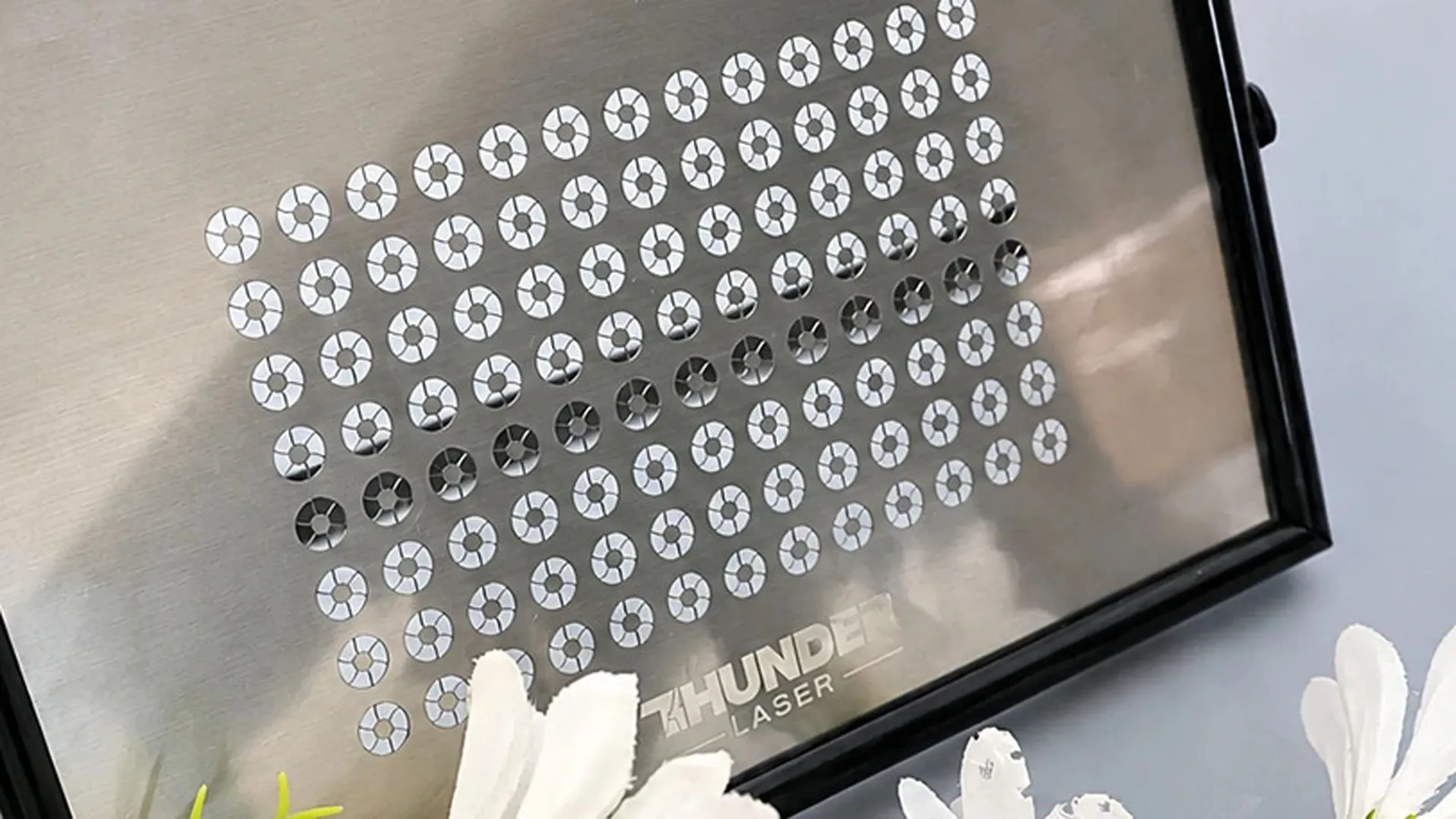
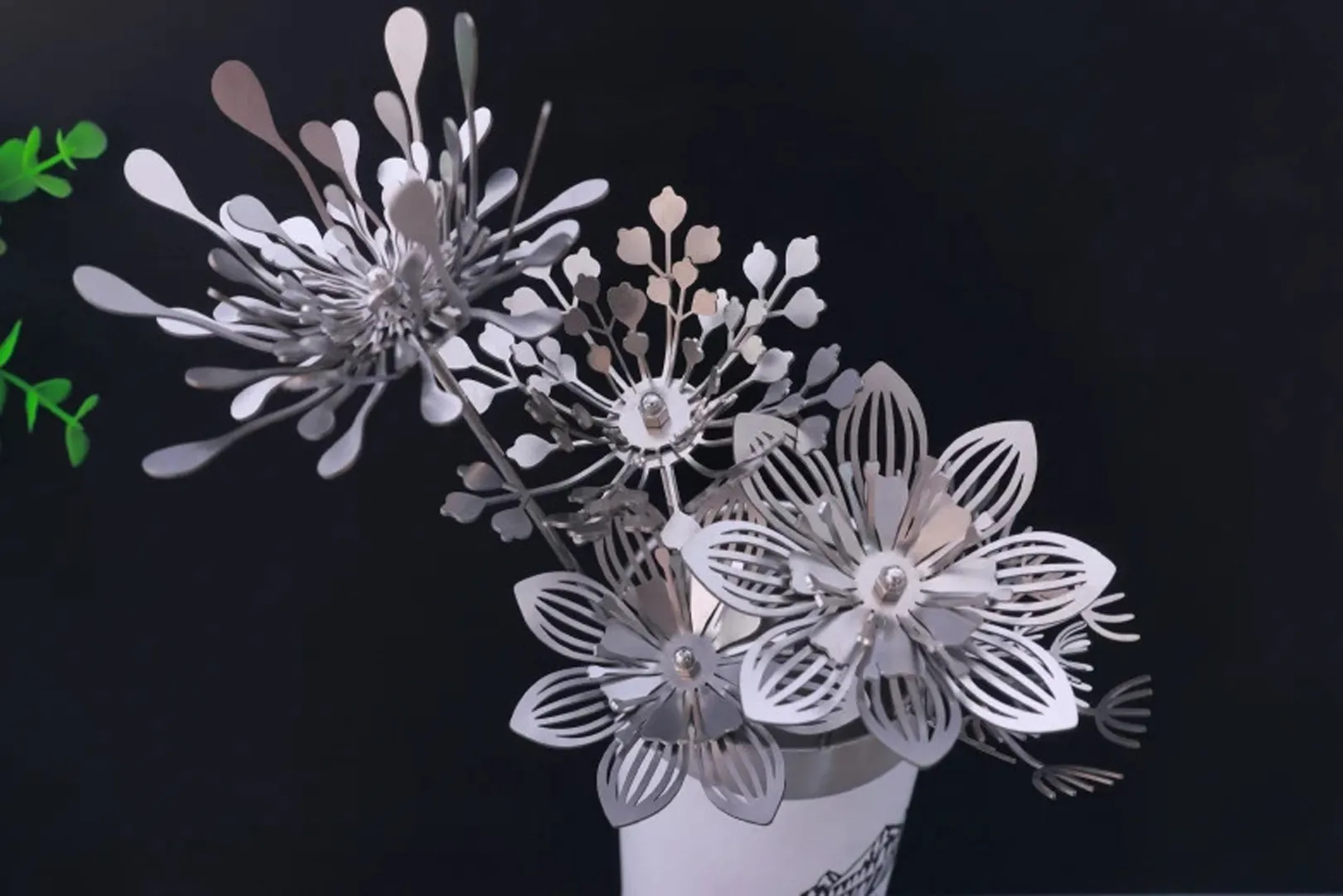
What Can You Make With a Metal Laser Cutting Machine?

The AccuMetal range can turn suitable sheet metal into precise parts, components and finished products. These applications can help fabrication, engineering, signage and product businesses bring suitable metal cutting work in-house.

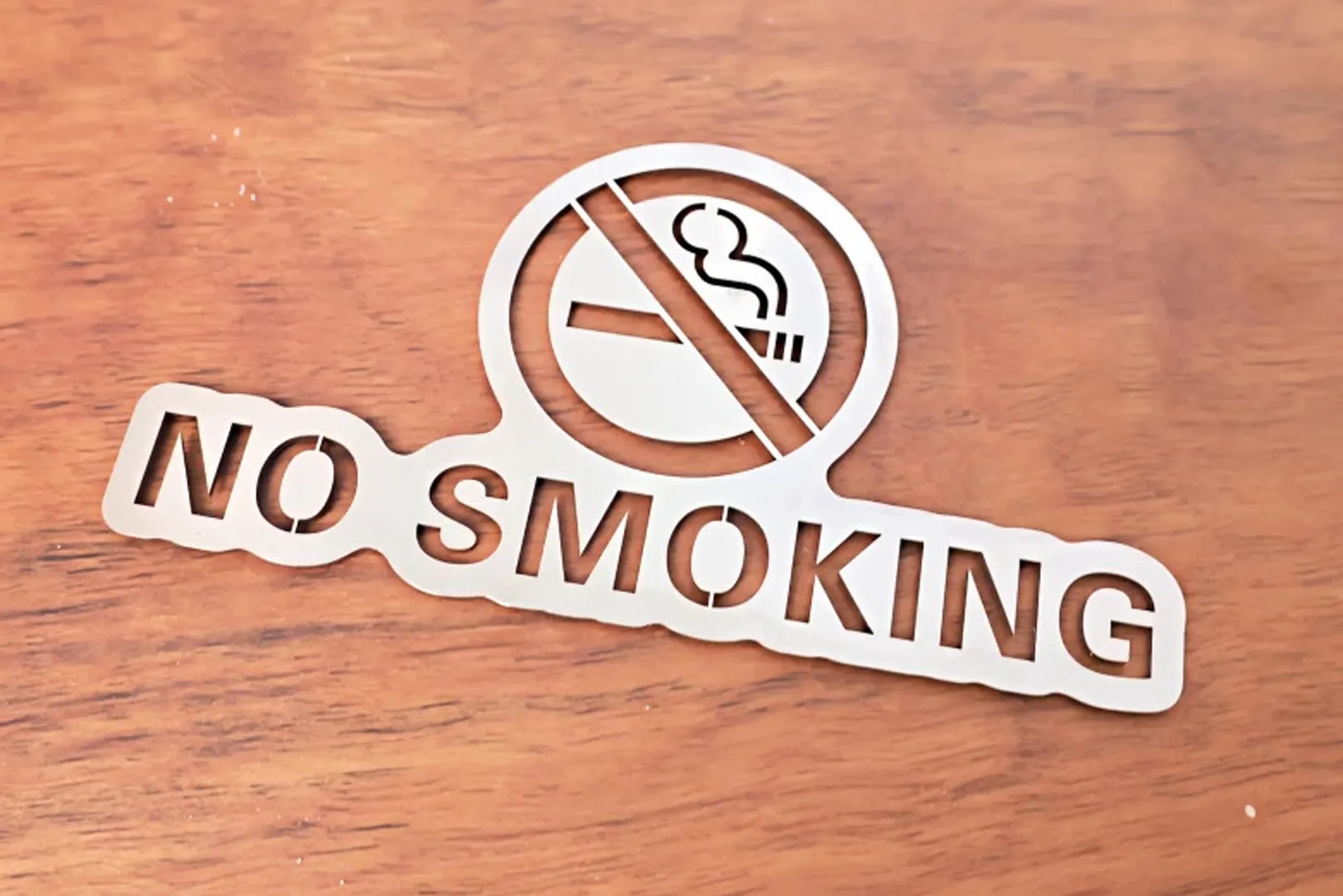
Metal Signs and Lettering

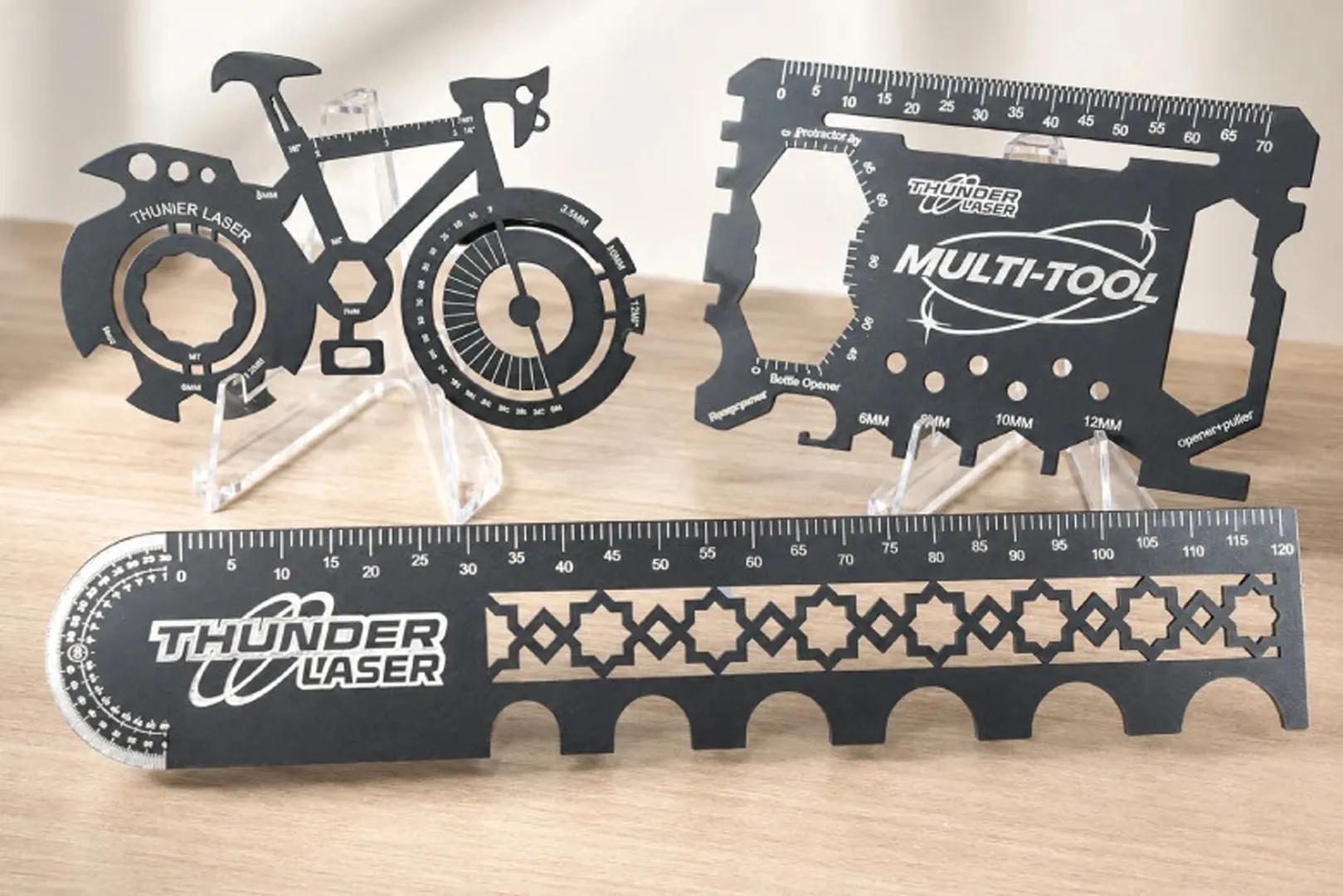
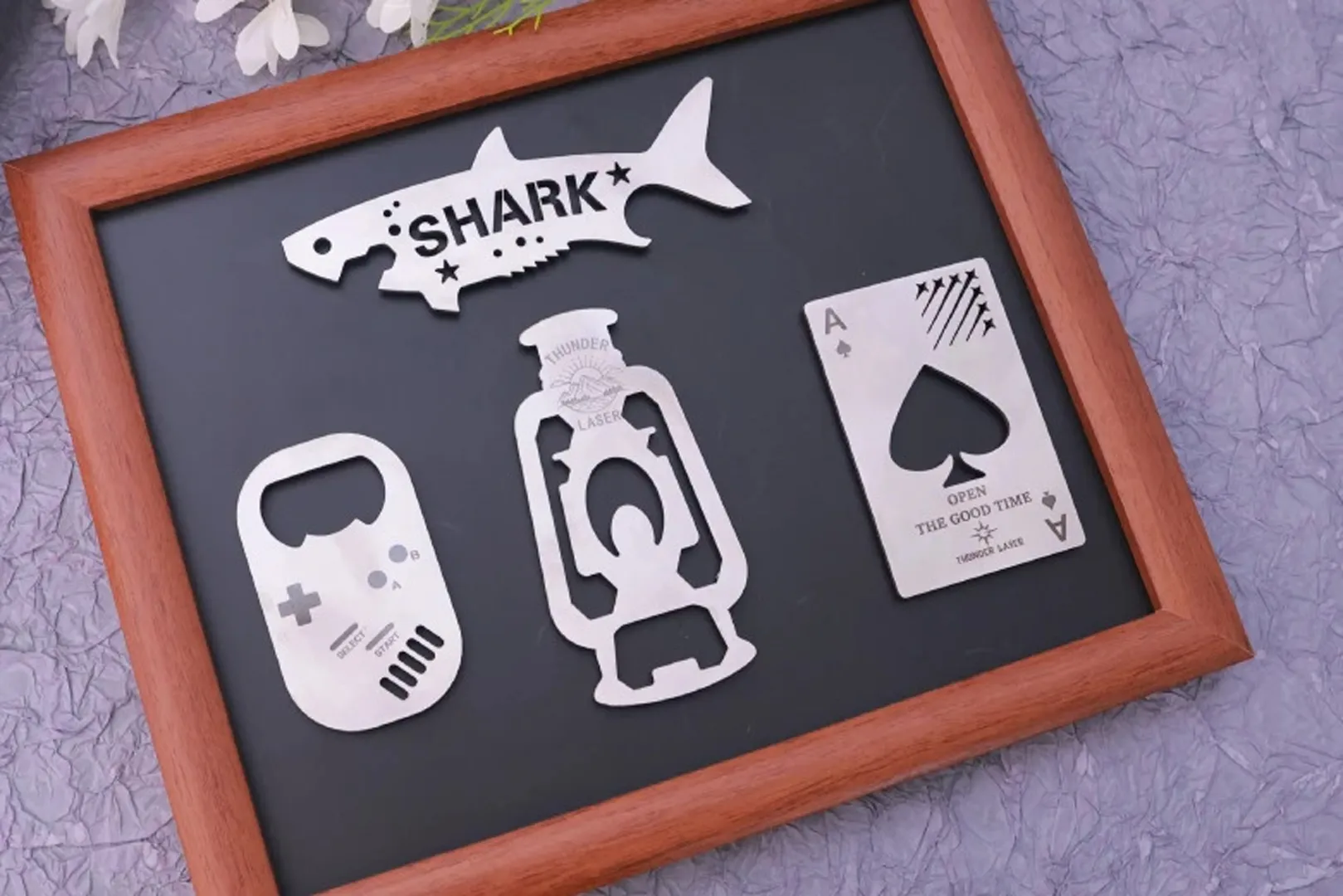
Cut letters, logos, plaques and signage components from suitable stainless steel, carbon steel, aluminium or brass. Examples include business signage, house numbers and cut-out lettering.

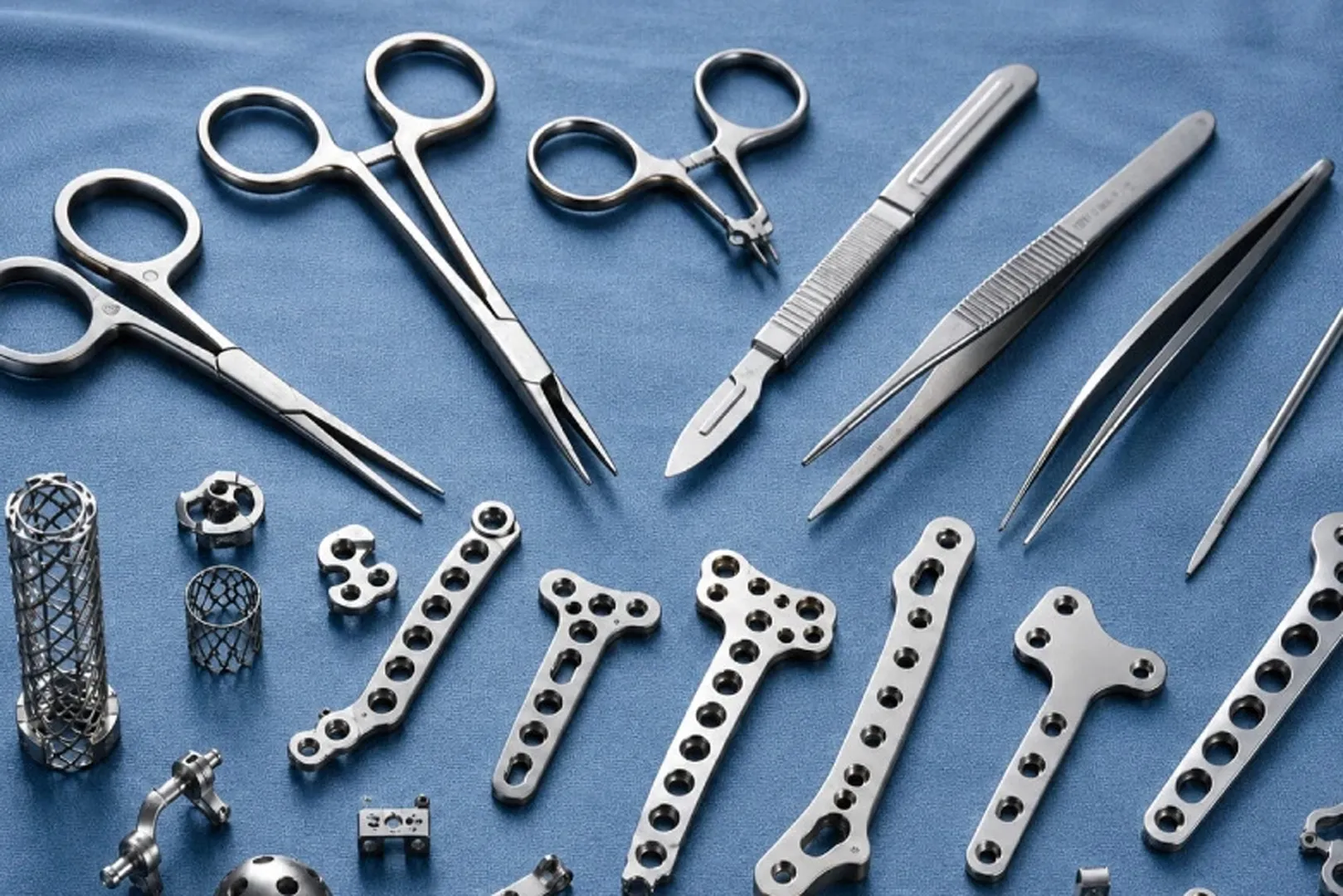
Engineering Parts and Components

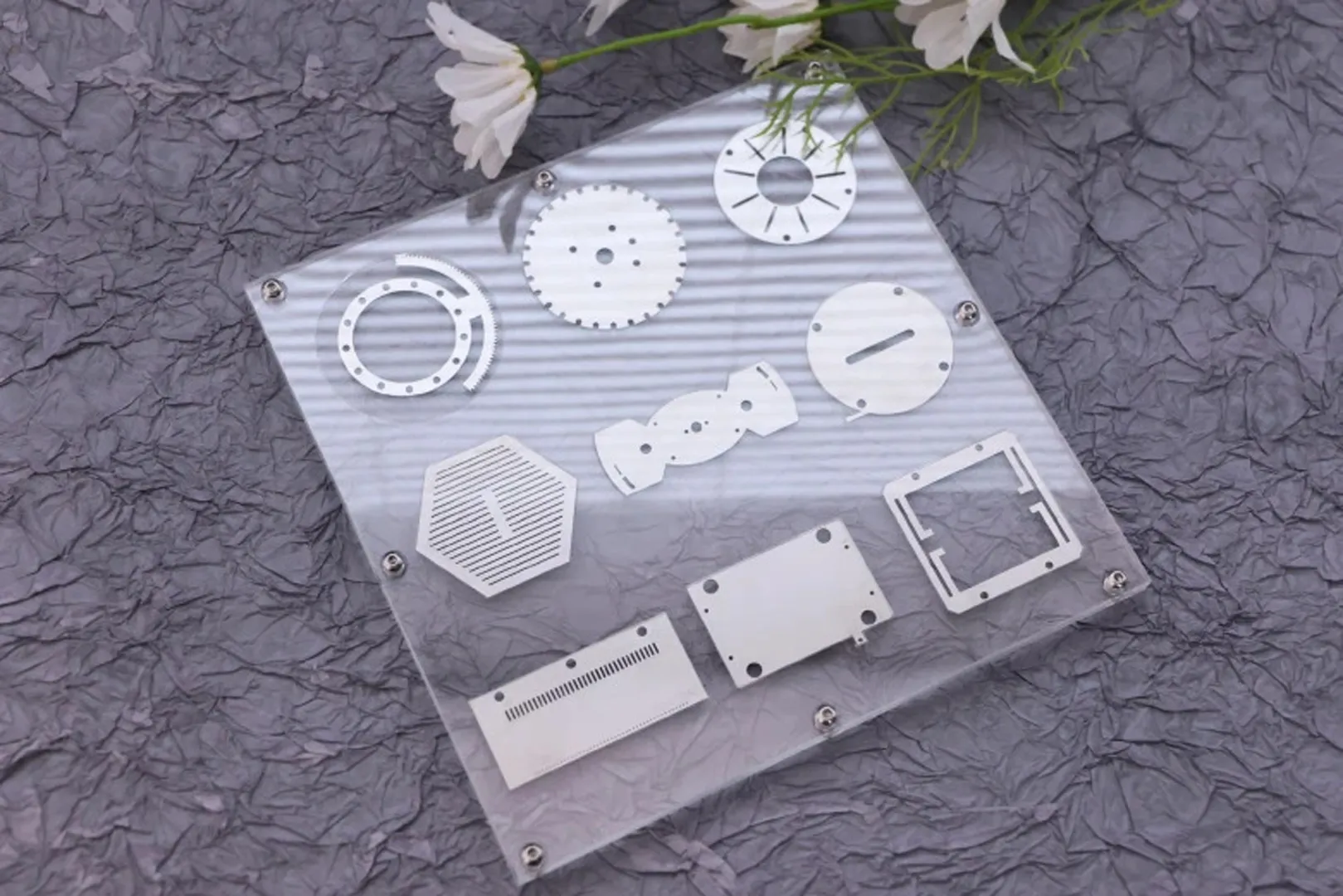
Produce brackets, mounting plates, flanges, covers and machine components for engineering, repair, manufacturing and fabrication.

Decorative Metal Panels

Create detailed patterns for privacy screens, wall panels, gates, feature panels and architectural inserts.

Custom Metal Products

Make nameplates, tags, metal décor, custom shapes and components for designers, businesses and product manufacturers.

Furniture and Interior Components

Cut table-frame parts, furniture brackets, shelving components, decorative inserts and custom fittings for furniture and shopfitting.

Production and Fabrication Parts

Use digital cutting files in repeatable production of enclosures, panels, mounting systems, production components and parts for fabricated assemblies.

From Digital Design to Finished Metal Part

Create a design, prepare the cutting file and use the fibre laser to reproduce suitable custom components, prototypes or production parts in metal.

What Metals Can a Fibre Laser Cutting Machine Cut?

Fibre laser cutting is used for ferrous and non-ferrous sheet metals. Thunder identifies carbon steel, stainless steel, aluminium alloy and brass in its current 1.5kW cutting data and also lists copper and galvanised sheet as AccuMetal material applications. Confirm the exact grade, thickness and desired edge quality for your work.

Stainless Steel

Use suitable stainless steel for signage, panels, brackets, kitchen components and decorative products where a precise profile matters.

Carbon Steel

Cut suitable carbon steel for fabrication, engineering and manufacturing: brackets, frames, mounting plates, machine components and other parts.

Aluminium

Produce lightweight signs, panels, enclosures, components and custom products from suitable aluminium alloy.

Brass

Use suitable brass for lettering, signage, nameplates, decorative pieces and custom components.

Other Metals

Fibre laser systems may process specialist metals such as titanium, bronze and alloy steel for precision components or custom fabrication, but AccuMetal capability for those specific materials is not established by the current Thunder cutting data. Give MaxLaser the exact material grade and application for a configuration review.

Metal Thickness and Cutting Capability

Maximum thickness depends on metal grade, laser power, assist gas and the cut quality you require. Thunder’s current 1.5kW technical table lists clean-cut, no-dross limits of 6 mm carbon steel and 5 mm stainless steel and separate cut-through-only limits of 15 mm and 10 mm. A cut-through limit does not promise a clean production edge. Base the decision on the thickness you normally produce at the finish you need.

Detailed material, thickness and speed parameters belong with the confirmed machine configuration and individual offer.

Which Assist Gas Do You Need?

The AccuMetal supports air, oxygen and nitrogen. The right choice depends on the metal, thickness, process and finished edge. Compare the gases.

What Is a Metal Laser Cutting Machine?

A metal laser cutting machine follows a digital design with a focused laser beam to make precise metal shapes and profiles without a physical cutting blade. Fibre laser wavelengths can be absorbed efficiently by suitable metals, making professional fibre systems useful for metal parts in fabrication, manufacturing, signage and custom production.


How Does a Fibre Laser Cutting Machine Work?

A fiber laser generates a concentrated beam that a cutting head focuses onto the metal. As the head follows the programmed path, the energy heats and melts material along the cut. Air, oxygen or nitrogen helps remove molten metal and influences the cutting process and edge.

Digital design → Cutting file → Fibre laser → Focused beam → Assist gas → Finished metal part


Why Use a Fibre Laser for Cutting Metal?

  • High precision: make detailed shapes and consistent components.
  • Fast processing: use non-contact cutting without a physical blade.
  • Complex shapes: cut curves, holes, slots, lettering and detailed profiles from a digital design.
  • Repeatable production: reuse a cutting file for recurring parts.
  • Reduced tooling: no dedicated blade or die for each design.
  • Flexible production: change digital designs without manufacturing new cutting tools.
 

Fiber Laser Cutting Versus Traditional Metal Cutting

Different methods suit different jobs. A fiber laser cuts from a digital file without a physical cutting blade, making detailed profiles and frequent design changes practical. Other processes may need different tooling or setup; their repeatability and edge finish depend on the method and application.

Feature

Fiber laser cutting

Other metal-cutting methods

Cutting method

Focused laser beam

Depends on the process and tooling

Complex shapes

Directly from a suitable digital file

Capability varies by process

Digital production

Cutting path follows a digital file

Varies by process

Tool changes

No cutting blade or die for each shape

May require tool or setup changes

Repeatability

Digital files support repeat runs

Depends on process and setup

Customisation

Change the file for a new design

May require additional setup

What Are the Main Types of Metal Laser Cutting Machines?

Machine format matters alongside laser technology. The AccuMetal models on this page are designed for flat-sheet production; other metal laser systems address different sizes or material shapes.

Compact Fibre Laser Cutting Machines

Compact systems suit smaller components, custom fabrication, prototypes, signage and repeat parts where a large sheet system is unnecessary. Thunder example: AccuMetal 24.

Combination Sheet and Tube Laser Cutting Machines

Some industrial systems combine flat-sheet and tube cutting for manufacturers that regularly need both. This is broader market context, not part of the AccuMetal range presented here.

Larger Format Fibre Laser Cutting Machines

A larger working area helps businesses make larger components and lay out more parts on a sheet for fabrication, engineering and manufacturing. Thunder example: AccuMetal 51.

Sheet Metal Laser Cutting Machines

Sheet systems cut flat sheet or plate from a digital layout. Typical parts include panels, brackets, signs, enclosures and machine components. The AccuMetal range fits this category.

Tube and Pipe Laser Cutting Machines

Dedicated tube systems process round, square or rectangular tube and structural profiles for frames, furniture and fabricated assemblies. Depending on the system, they can cut holes, slots, profiles and joints. This is a separate machine category, not an AccuMetal capability claimed on this page.

Which Type Does MaxLaser Supply Here?

This page focuses on Thunder AccuMetal professional fiber laser cutting machines for flat-sheet metal work. Choose the 24 for a compact 610 × 610 mm work area or the 51 for a 1300 × 1300 mm area. Confirm any optional power configuration with MaxLaser. For the broader range, explore MaxLaser laser cutting machines.

Explore Thunder AccuMetal machines

How to Choose the Right Metal Laser Cutting Machine

Choose around the work you expect the machine to do every day: material, thickness, largest part, working area, production volume, gas supply, available space and total operating cost.

1. What Metals Do You Need to Cut?

Start with the grades you process most often. Carbon steel, stainless steel, aluminium alloy and brass have different cutting requirements; other grades and metals need a specific suitability check. Material choice also affects settings and assist gas.

2. What Thickness Do You Need to Cut?

Judge the machine against your normal production thickness and required edge quality, not only the maximum thickness it can cut through. A business making thin decorative components has different requirements from one regularly cutting heavier plate.

Buyer tip: Allow for occasional thicker jobs, but choose around the material and thickness you process most often.

3. How Large Are Your Parts?

The AccuMetal 24 offers a 610 × 610 mm working area; the AccuMetal 51 offers 1300 × 1300 mm. Check the largest part, how parts will be laid out on a sheet and the space needed for regular production.

4. How Much Laser Power Do You Need?

Both current standard models have a 1.5kW fibre laser. Thunder describes an optional 3kW series configuration, but higher power is not automatically the right purchase. Match the exact configuration to your material grades, typical thickness, required finish and production performance; obtain application-specific cutting data for an optional setup.

5. How Much Will You Produce?

Plan for occasional custom jobs, small batches, regular daily production or higher-volume manufacturing. Consider likely future demand as well as today’s workload. Bringing outsourced work in-house calls for a different evaluation from running continuous fabrication production.

6. What Assist Gas Will You Use?

Air, oxygen and nitrogen affect the process, edge and running costs differently. Include gas supply in the purchase decision, rather than considering it only after installation.

7. How Much Space Is Available?

Consider the complete production setup, including access around the machine and the supporting systems your installation requires. The 24’s smaller footprint may suit a space-conscious workshop.

8. What Is the Total Cost of Ownership?

Look beyond the machine investment. Factor in assist gas, electricity, consumables, maintenance, technical support, training and the production efficiency your business needs.

Buyer tip: Ask which configuration gives your business the capability it needs, rather than choosing on purchase price or wattage alone.

AccuMetal 24 or AccuMetal 51?

  • Choose the 24 if your parts fit its 610 × 610 mm working area and the standard 1.5kW process meets your material and thickness needs.
  • Choose the 51 if you need its 1300 × 1300 mm working area for larger parts or sheet layouts. Assess power and cut quality separately; it can be fitted with the 3kW laser power from the standard 1.5kW.

Still unsure? Tell MaxLaser the metal and grade, normal thickness, largest part and approximate production volume. Ask for help choosing.

What Gas Is Used for Fibre Laser Cutting?

An assist gas helps remove molten material from the cut. The AccuMetal supports nitrogen, oxygen and air. Your choice can affect cutting behaviour, edge appearance, speed and operating cost; it depends on the material and result required. 

Nitrogen for Fiber Laser Cutting

Nitrogen is an inert gas often chosen for stainless steel, aluminium and brass where a clean-looking edge, reduced oxidation and a good surface finish matter. This is useful for decorative parts or components moving to another finishing process. Nitrogen consumption can be relatively high, so gas supply and operating cost need to be planned.

Oxygen for Fibre Laser Cutting

Oxygen supports the cutting reaction in carbon steel, especially in thicker material. It can leave an oxidised edge, which may need preparation before painting, coating or welding.

Compressed Air for Fiber Laser Cutting

Compressed air contains oxygen and nitrogen, so its cut characteristics differ from high-purity nitrogen. It may reduce reliance on supplied gas and offer a convenient, potentially lower-cost option for regular, general-purpose work where material, thickness and edge quality allow it. Pressure, volume and air quality must suit the machine; a standard workshop compressor must not be assumed adequate.

Nitrogen Versus Oxygen Versus Air

Decision factor

Nitrogen

Oxygen

Compressed air

Edge finish

Reduced oxidation; finish depends on process

Oxidised edge

Application dependent

Typical use

Suitable stainless steel, aluminium and brass work

Carbon or mild steel

Suitable general-purpose cutting

Operating cost

Consumption and gas supply can be substantial

Gas cost applies

May lower supplied-gas cost; compressor costs apply

Main advantage

Clean-looking finish

Supports carbon-steel cutting

Convenient supply where suitable

Best choice when

Finished appearance matters

The carbon-steel process benefits from oxygen

The material and finish permit cost-conscious air cutting


Which Assist Gas Is Best?

There is no single best gas for every cut. Decide using metal grade, thickness, laser configuration, required edge finish, cutting speed, cost and what will happen to the part after cutting. A decorative stainless-steel component and a carbon-steel fabrication part may need different processes.

Inside the Thunder AccuMetal Metal Cutting System

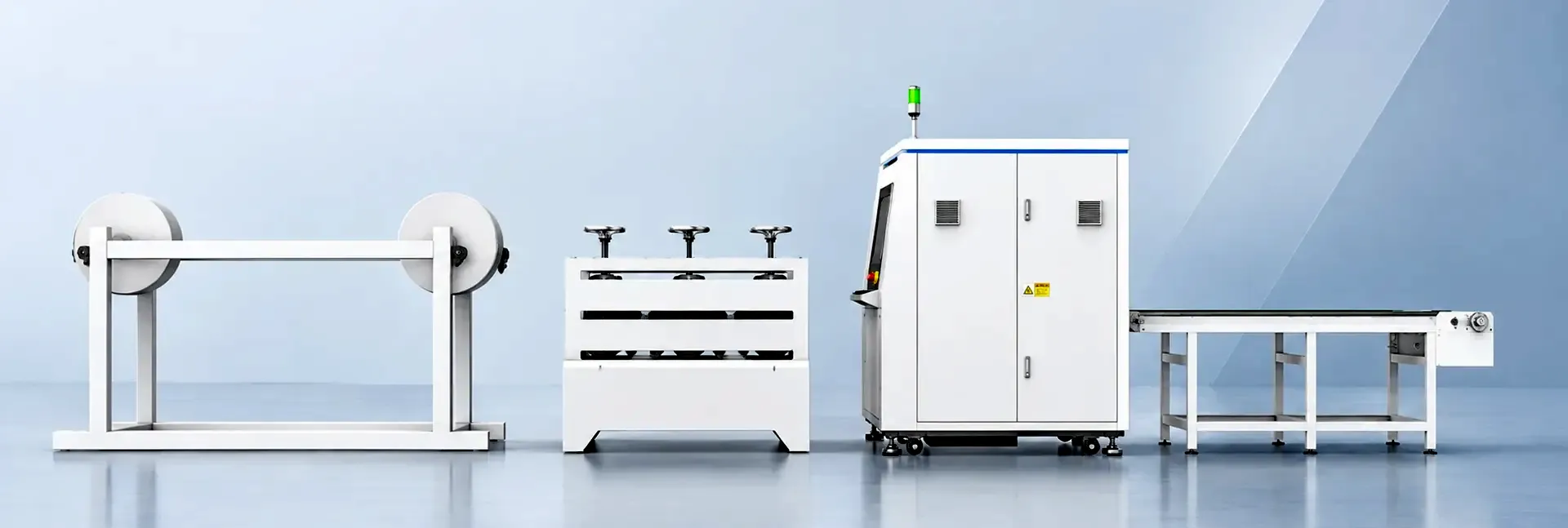
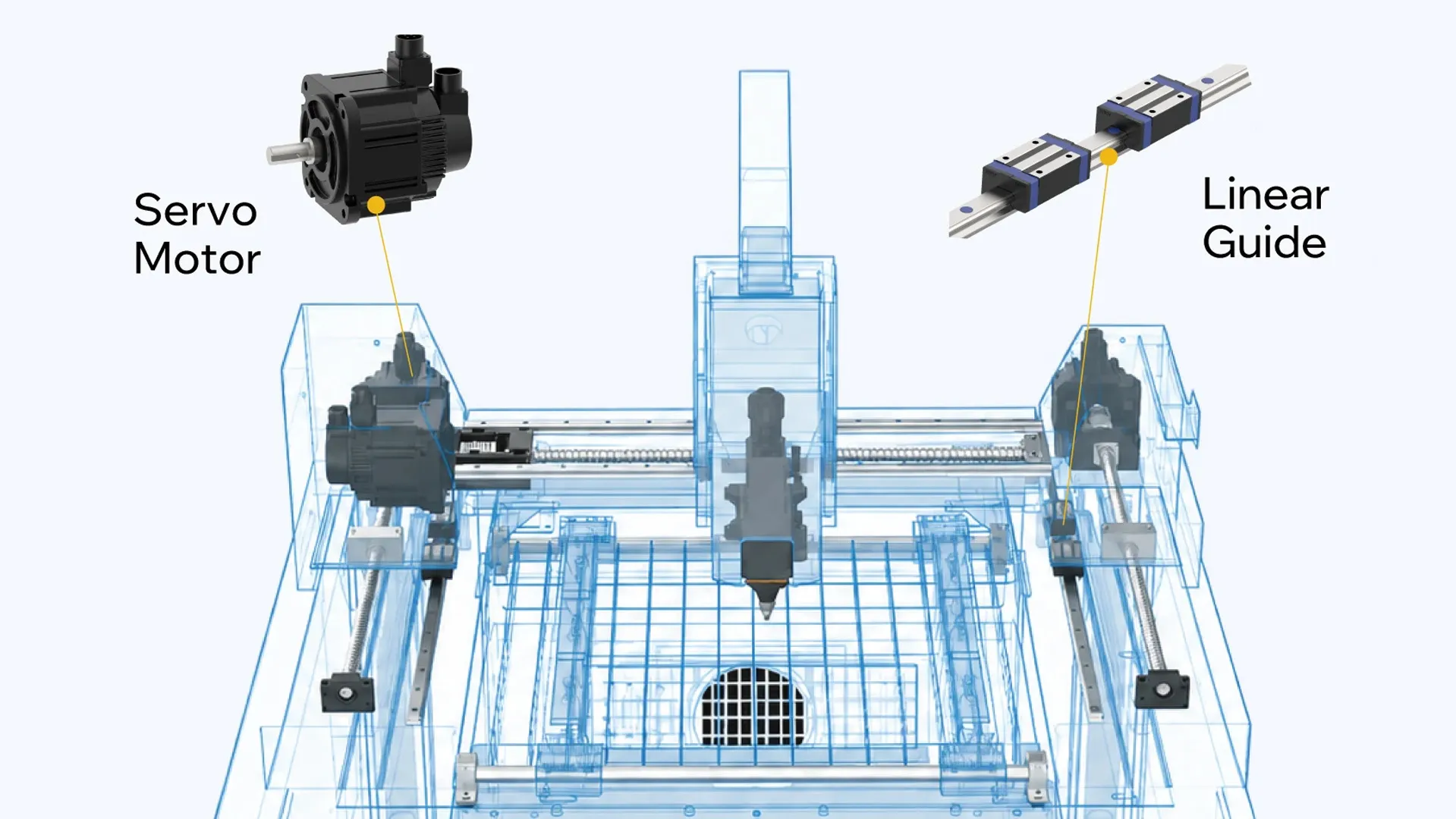
The AccuMetal combines a fibre laser, focused cutting head, motion and control systems, assist-gas processing and water cooling to make repeatable metal cutting possible.

Internal view of the Thunder Laser AccuMetal showing the servo motor and linear guide motion system.

Fibre Laser Cutting Technology

AccuMetal 24 use a 1.5kW fiber laser designed for suitable metal processing. While the AccuMetal 51 can also offer 3kW series configuration for applications that require thicker cutting.

Precision Laser Cutting Head

The cutting head focuses the beam on the metal as the machine follows a prepared design. Together with controlled motion, this supports detailed profiles, holes and components.

High-Precision Motion System

Thunder lists ±0.02 mm positioning accuracy for both models. This is a machine-motion specification; finished-part tolerance also depends on the material, geometry and cutting process.

Fast, Controlled Movement

Thunder lists maximum machine speed of up to 30 m/min. Fast positioning can reduce movement between features and parts; actual cutting speed depends on the job.

Multiple Assist-Gas Options

Select air, oxygen or nitrogen to suit the metal and required cut. Review the gas choices.

Integrated Cooling System

The AccuMetal uses water cooling as part of its metal-cutting system. Cooling, gas delivery and the laser process must be planned as a complete installation.

Industrial Control System

The machine control system translates prepared cutting files into motion and manages the cutting workflow. It supports digital production where designs and jobs change regularly.

Built as a Complete Metal Cutting Platform

The laser, cutting head, motion system, controls, cooling and assist-gas delivery work together to turn a digital design into a repeatable finished component.

See Our Metal Laser Cutting Machines in Action

The best way to judge a metal-cutting result is to inspect the process and the part. See real cutting, detailed shapes and the finished edges, then discuss how they compare with your production requirements.

Book a live demo

Metal Laser Cutting in the Real World

Real cut parts give you a clearer view of the machine’s capability than generic claims. MaxLaser plans to show verified AccuMetal demonstrations and, when available, genuine customer installations and production examples.

First-party samples pending: material, thickness, machine configuration and finished result must accompany each example before it is published. Customer names, outcomes and videos require that customer’s confirmed details.

From installation and operator training through to production, MaxLaser supports the move from a new machine to a working process. Future examples may include metal signage, brackets, engineering components, decorative panels, custom parts and production components actually cut on AccuMetal.

Learn More About Metal Laser Cutting

Explore fibre laser technology, suitable metals, material thickness, assist gases and machine selection in the guidance above. MaxLaser also plans deeper guides on fibre laser cutting, metals, thickness, gas choice, fibre versus CO₂ technology and choosing a metal laser cutter. Links will be added as those guides are published and verified.

More Than a Machine – Training & Ongoing Learning

Get practical training, tutorials, projects ideas and ongoing learning through the MaxLaser Academy.

Explore MaxLaser Academy Browse All Articles

Frequently Asked Questions

It follows a digital design with a focused laser beam to cut metal shapes and components. The Thunder AccuMetal range uses fibre laser technology for suitable metal work.

Thunder’s current AccuMetal data covers carbon steel, stainless steel, aluminium alloy and brass, and its broader application list includes copper and galvanised sheet. Exact grade, thickness, gas and required result determine suitability. Ask MaxLaser to assess titanium, bronze or alloy steel separately.

Thickness depends on material, grade, gas, power and the edge quality you need. Thunder’s current standard 1.8KW technical table lists clean-cut, no-dross limits of 6 mm carbon steel and 5 mm stainless steel. It separately lists cut-through-only limits of 15 mm and 10 mm; these do not promise the same finished edge. Ask MaxLaser to assess your usual material and required result.

Working area is the main standard-range difference: 610 × 610 mm for the 24 and 1300 × 1300 mm for the 51. Thunder lists a standard 1.5kW fiber laser for both models. An optional 3kW series configuration needs separate application and offer confirmation.

The AccuMetal supports air, oxygen and nitrogen. Choose according to material, thickness, required finish and the available gas system. Read the gas comparison.

Yes. Thunder includes aluminium alloy in its current AccuMetal cutting data. Grade, thickness, settings, gas and required finish must be checked for your job.

Yes. Stainless steel is in Thunder’s AccuMetal cutting data; its current standard 1.5kW clean-cut figure is up to 5 mm under the specified conditions. Confirm your grade and edge requirements.

Fibre laser systems are commonly used for dedicated metal cutting. CO₂ laser systems remain useful for many non-metal materials, including acrylic and wood. Choose around the material and process rather than assuming one laser type suits every task.

Start with material and normal thickness, then compare your largest component with the 24’s 610 × 610 mm and the 51’s 1300 × 1300 mm work areas. Both standard models are 1.5kW. Ask MaxLaser to assess your application.

MaxLaser provides professional installation and setup for its larger industrial laser machines. Confirm what is included for the AccuMetal configuration in your quotation.

MaxLaser provides practical training with its professional laser machines so your team can understand operation and the production workflow. Confirm the AccuMetal training scope in your quotation.

Yes. MaxLaser provides ongoing technical and after-sales assistance for machine operation and troubleshooting.

Finance options are available to qualifying businesses, subject to approval and applicable terms. View finance options.

Ask MaxLaser about an AccuMetal demonstration. A live session, when available, lets you discuss your materials, thicknesses and production requirements. Book a live demo.

Tell MaxLaser which model you are considering and include your materials, grades, thicknesses, largest part and expected production volume. This helps the team assess a suitable configuration. Request a quote.

Your Success Starts With the Right Metal Laser Cutting Machine

Whether you are bringing metal cutting in-house, expanding a fabrication business or investing in a new production system, MaxLaser can help you assess the Thunder AccuMetal configuration that matches your materials, component sizes and production needs.

Maxlaser installation and training

See the AccuMetal in Action

Discuss a live demonstration and inspect the cutting process and finished metal components.

Book a Demo
Maxlaser Local South African Support, Stock & Spares

Finance Your  Laser Cutter

Explore finance options for qualifying businesses as you plan the equipment investment and cash flow.

Finance Options
Lifetime technical support

Need Help To Choose?

Give MaxLaser the metal, thickness, component size and production volume you need to handle.

Speak to an Expert